
 From 1 January 2020, there is a proposal to increase the VAT rate from 5% to 7.5%. The change in the VAT rate would coincide with an imposition of registration and filing obligations for foreign services providers, including technology services providers.Read More »
Category: Tax Knowledge
Norway – Registration obligation for non-resident companies as of 1st of April 2020 for delivery of more than USD 5,500 in B to C sales
 From 1 April 2020, the Norwegian government is proposing to make changes to the Value Added Tax (VAT) rules that apply to non-resident businesses selling and shipping directly to consumers in the country.Read More »
Mexico – 30 June 2020 VAT registration required for non resident companies providing digital services
 Rendering of Digital Services– June 2020
The digital services provided to recipients located in the national territory will be subject to VAT.Read More »
Poland – Introduction of the White List of VAT Taxpayers as from 1 of January 2020 (Biala Lista Podatnikow)
It seems that not all taxpayers may be aware of possible consequences in connection with recent legislative changes in Poland. Please find below high level summary and consequences that the White List of Taxpayers brings as from 1 January 2020.Read More »
China – changes in VAT legislation expected shortly
 A draft of the first VAT law in China’s history has been released by the Ministry of Finance and the State Taxation Administration on 27 November for public comments. Although VAT was implemented in 1994, currently it is still governed under the Provisional Regulations. Read More »
New Billionaires Insights 2019
Long-term vision, smart risk taking, business focus and determination have resulted in businesses that have tended to outperform others financially. There was a dip in wealth in 2018. Billionaire wealth dropped 4.3% globally, after five years when it grew by 34.5%.* As the center of economic activity shifts towards Asia, the region’s entrepreneurs are playing a strong role. There will be many more winners and losers in the years to come.
It is difficult to predict the future but leading entrepreneurs are primed for a more difficult environment. But what will remain constant is the billionaire effect – the ability to transform entire industries, to create large numbers of well-paid jobs, and to rally the world to find cures for diseases such as malaria.
For details please read below. It’s really quite an interesting reading.Read More »
Japan: New Invoicing, Bookkeeping, and Registration Requirements as from 2023

In brief
October 1, 2019 saw major changes come into effect with regard to the Japanese Consumption Tax (“JCT”) regime, which for the first time introduced multiple tax rates (8% and 10%). Additionally, with effect from October 1, 2023, the JCT rules introduce a new qualified invoice regime, under which a purchaser will only be able to obtain a JCT input credit if presented with a qualified invoice. Read More »
Incoterms (INternational COmmercial TERMS): Neue Regelung ab 1. Januar 2020

Incoterms sind vereinbarte standardisierte Klauseln, die es den Vertragsparteien ermöglichen Regelungen über Leistungsort, Leistungspflichten und den Gefahrenübergang eindeutig zu bestimmen. Die Incoterms geben jedoch keine Auskunft darüber, wann und wo das Eigentum an der Ware zwischen den Parteien übergeht. Ebenfalls Zahlungsbedingungen, Gerichtsstand sowie die umsatzsteuerliche Verfügungsmacht werden in ihnen nicht geregelt.Read More »
Incoterms (INternational COmmercial TERMS): New regulation from 1 January 2020

Incoterms are agreed standardized clauses which enable the contracting parties to clearly determine regulations on the place of performance, performance obligations and the transfer of risk. Read More »
4. Schweizer MWST Tagung in Bern – Eindrücke und Erkenntnisse
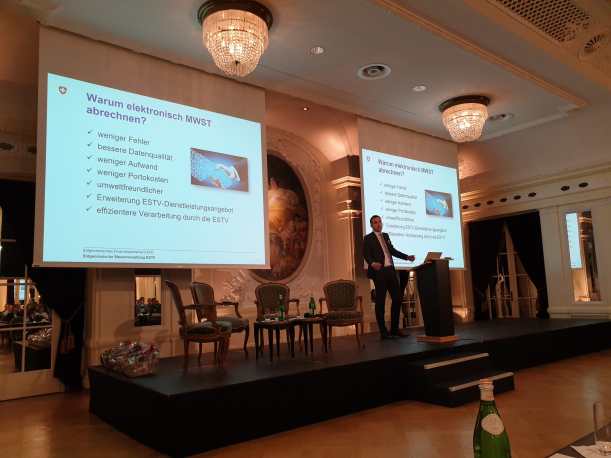





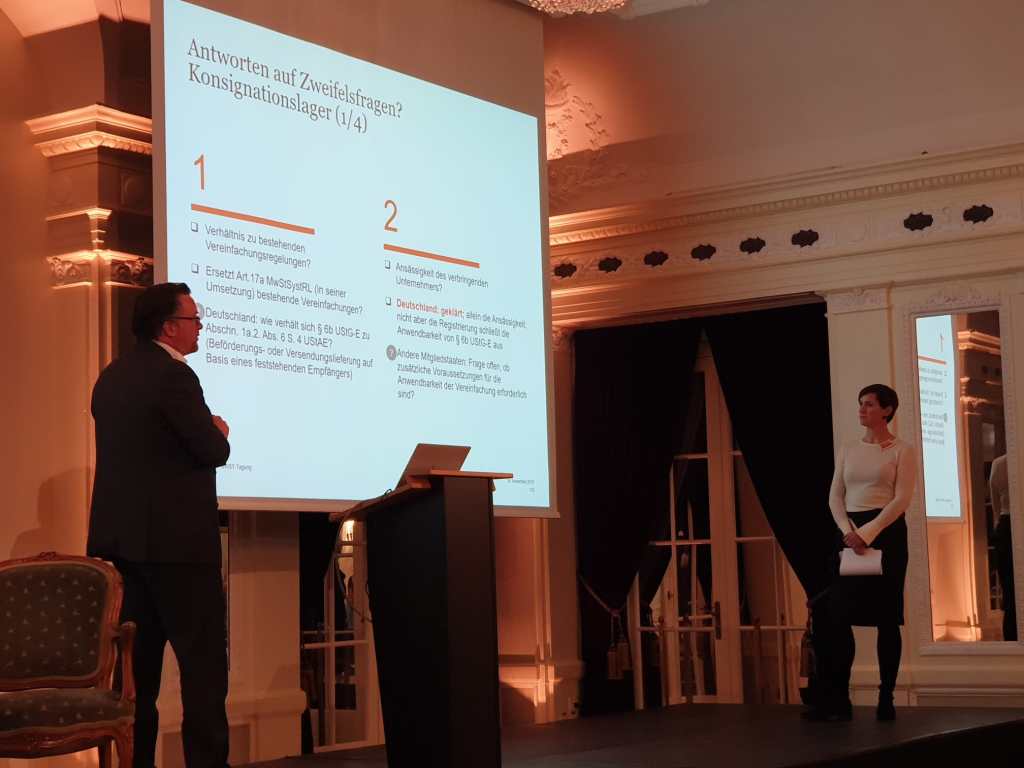


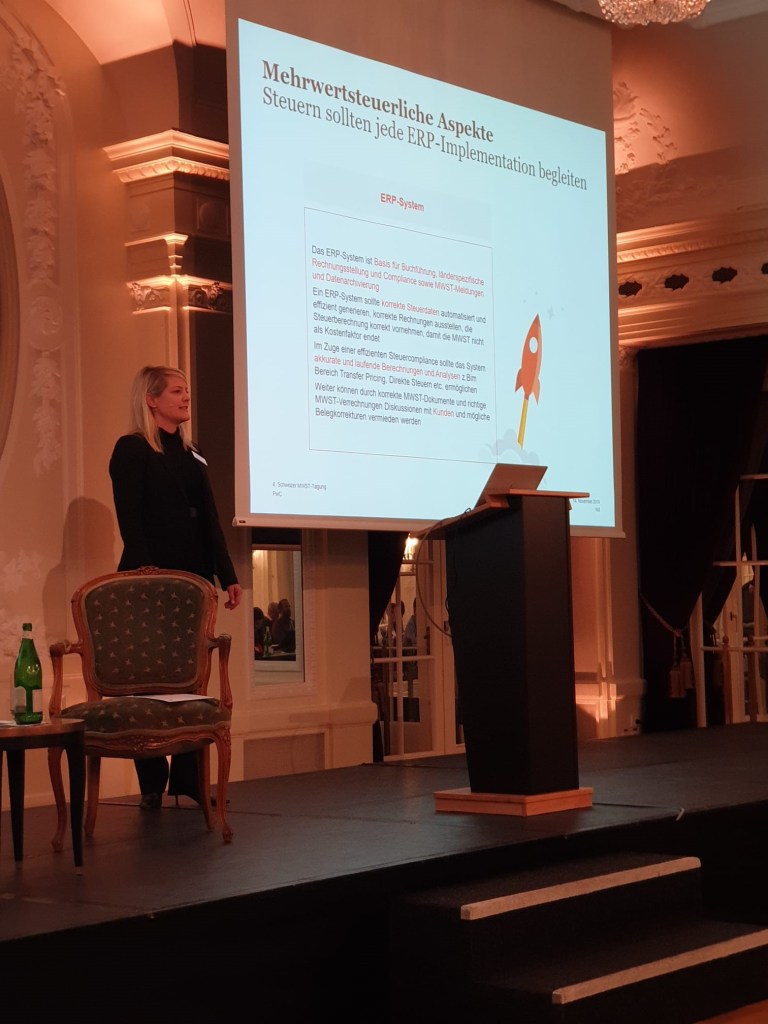


Aktuelle MWST Themen der Eidg. Steuerverwaltung – Ralf Imstepf, Leiter Abteilung Recht, HA MWST
“MWST Abrechnung Easy” kommt bald. Im Laufe von 2020 oder 2021 kommt die Ausweitung der digitalen Deklarations-Angebote für die MWST. Es wird zwei Optionen geben, die “ESTV-Suisse Tax” und die “MWST Abrechnung Easy”. Das Ziel ist, in der Zukunft vollständig auf die digitale Abrechnung zu wechseln. Die Papierabrechnung kann in Ausnahmefällen auf schriftliche Bestellung erfolgen und bleibt weiterhin bestehen. In 2019 reichen 45% der Mehrwertsteuerpflichtigen die Abrechnung elektronisch ein.
 Michaela Merz