I don’t like traveling


It’s hard to believe, but I don’t like traveling. Traveling causes me a lot of stress. All the more surprising is that I have professionally traveled half the world and seen and experienced incredible things.
I have worked as a tour guide myself, with some dramatic experiences. One of the best was when I, in true James Bond style, chased a train with a rented bus through the European part of Turkey, where our railway car was located, the one that was supposed to take us to Prague. The train left Istanbul three hours earlier than scheduled, without my group and without any warning. That happens — not only are trains often late, as is so common recently in Germany, but they can also be early.

Or when I was alone in São Paulo without any jewelry (to prevent theft) and it started to rain. The rain in São Paulo felt more like a shower, and of course, I didn’t have an umbrella. The nearest place I could hide was a beauty salon that also did nail polish. My nails had remained unpainted throughout my life. Between work and family, there was simply no time. But in that salon in São Paulo, they didn’t just beautify my nails with color — they created an entire garden. Each of my nails was painted with a flower. For ten days, my nails were like a fairy tale prince’s. Two days later, I flew back to the wintry Switzerland, straight to a professional tax conference in St. Gallen. I had never received so much attention there as I did that year thanks to my flowery nails. Even the gentlemen from the tax authority were interested in the floral designs. Who would have thought rain in São Paulo could be so useful!

I love exploring foreign places, I’m fascinated by different cultures, and I enjoy chatting with locals whenever possible. One unforgettable experience was when I accidentally ended up at a wedding in Russia with lots of vodka and salted fish. I enjoy seeing new things — it’s the journey that’s difficult for me, even though I’ve never really gotten lost or had a bad experience. In contrast, my mother tends to get lost everywhere unless someone holds on to her firmly. As a child, she managed to fall asleep on the subway during a school trip in Berlin and ended up alone in West Berlin, without speaking much German. You could say she emigrated there unplanned and unwillingly.

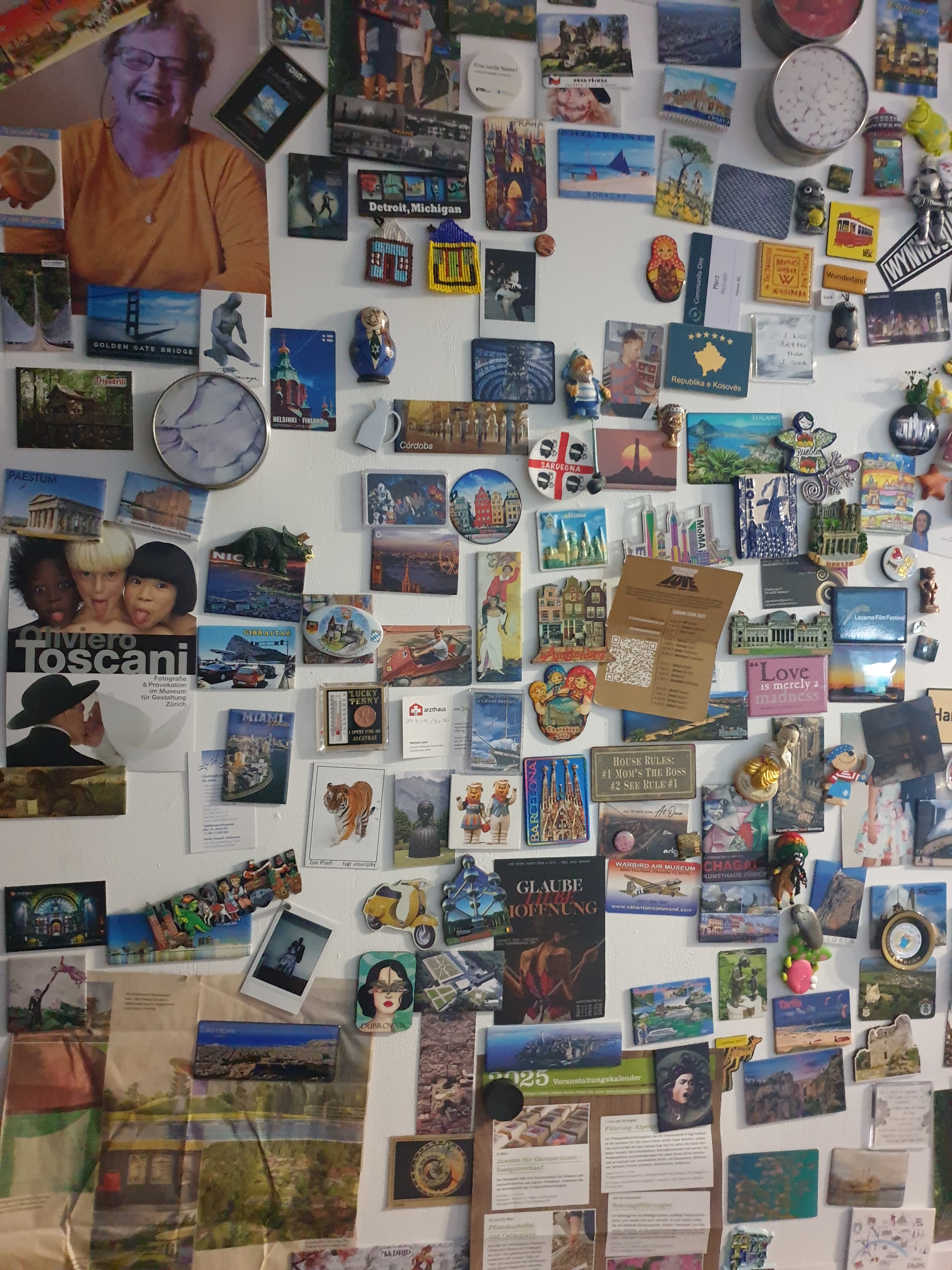
On trips, there are always local souvenirs that carry a bit of the exotic, and people like to buy them to have a tangible memory of their experiences abroad. But they tend to pile up, and at home, these souvenirs rarely have the same power as the places themselves. That’s why years ago I decided not to buy souvenirs anymore. In the end, they just end up in the trash. Instead, I buy a magnet at every place I visit. I painted a wall with magnetic paint, and the magnets go up by the entrance. From time to time, I stand in front of that wall, and each little piece reminds me of amazing experiences, encounters, and unique stories that have accumulated over the course of my life.

There isn’t much space left, but still some. Although I don’t like traveling, I am drawn to faraway places. There’s still room for a few more magnets.

Birthday


I’m not a fan of Christmas, New Year’s, or my birthday. Since childhood, I’ve dreaded the idea of a planned celebration: now it’s supposed to be fun, cozy, or whatever. Joy on command isn’t my strength, and I don’t feel any anticipation. I get lots of well-meant congratulations and gifts that I often don’t know what to do with. And there’s the forced feeling of giving cheerful responses to all the congratulations.

What I do enjoy is spontaneously or casually meeting up with my former schoolmates, friends, or acquaintances – whether in twos, threes, or a larger group – for a fun, casual evening or weekend without any agenda or expectations.

And here we go again. It’s my birthday. Once again, in January, like every year. My friends message me, which genuinely makes me happy because their wishes are authentic and accompanied by sincere offers to go hiking, to the movies, the theater, or an exhibition. They know me and understand that material gifts rarely make me happy. My kids reach out, my parents and other relatives write. A few long-standing business partners get in touch. Then there are calls and emails triggered by calendar reminders from my insurance, car garage, and other service providers. The SBB gives me a voucher for a drink, Ticketcorner offers me a 5 CHF discount. I don’t want to seem ungrateful, but honestly, I don’t need AI programmed to remember my birthday. That’s not fun.

I visited my mom recently to help her adjust her hearing aids. Now I’m flying back home on my birthday. I settle into my seat – and since I bought a super cheap ticket, I wasn’t surprised to be seated in the last row, just like on the outbound flight. Paying extra to sit 15 rows forward isn’t worth it to me. I can read and think anywhere. I sit down, open my laptop, and start working. Then the flight attendant comes up to me and asks if I’m Ms. Merz. Yes, I am. She congratulates me and hands me a bar of chocolate. And that got me. The unexpected touched me emotionally. Well done, Swiss – I truly appreciated this gesture.

By the way, this year, for the first time in a while, I have a material wish: I’d like to buy a pool table. That’s quite an ambitious wish, though. A pool table is big and heavy. There’s no space for it in my apartment. But at the vacation house, it might be possible to add onto the room above the old stable and set it up there. That’s my birthday wish and likely a project for the next three years. I need an architect who specializes in old buildings. The walls are made of stone; the house was built in 1906, and the stables likely over 100 years earlier. I need a project manager and a building permit. The project will undoubtedly be challenging because adding a floor will probably require a completely new roof. As always, my budget is limited, and everything needs to fit within it.

Why pool? During my vacation, I played almost every day for the first time in ages. I’m not good at it. I’ve always lacked three-dimensional vision, and geometry was my nemesis in school. When I took an intelligence test at 14 (to help choose a career), I scored zero points in spatial visualization. They had me retake that part of the test because they suspected something had gone wrong. The result was the same: zero points. There are just things I cannot do. Spatial visualization is a huge advantage in pool. Parallel parking, for instance, took me years to master. Today, I can do it easily and without the sweaty stress of my first 20 years as a driver. I remember colleagues and instructors who promised to teach me – none of them succeeded. I had to figure out how to compensate for my lack of ability.

Pool is similar. I can’t intuitively predict what happens when one ball strikes another, but I’ve learned to analyze it. Outsmarting my weaknesses gives me immense joy. I need the pool table to improve, which requires the room addition, which requires a permit that an architect and project manager should handle. If you know any great architects or project managers, that would be a wonderful birthday gift.

It’s my birthday again. Swiss, thanks for the chocolate.

Jamaica – A Journey Worth Taking


Before my departure, I had some concerns, mainly because of the many alarming reports I read during my preparations. The long list of required vaccinations and warnings about high crime rates – particularly the fact that the murder rate is among the highest in the Western Hemisphere – made me very uneasy. Even travel guides classifying Jamaica as a “medium-risk destination” didn’t offer much reassurance. The advice to “always be accompanied by someone you know, even when going to the restroom,” seemed excessively paranoid.

I’m not the type of person who frequents bars between midnight and dawn or feels the need to explore slums up close. At the beginning of my stay, I was very cautious and risk-averse. But if you’re not willing to venture out, you’ll never discover anything. With a rental car, I was able to explore a large part of the island. The north is different from the west and south, and every area is worth visiting. Jamaica is definitely worth the trip.

The island offers well-maintained areas with impressive villas and lush gardens, colorful wooden houses full of charm, as well as impoverished shacks and a few abandoned ruins. But where don’t you find such contrasts? I was especially fascinated by the ruins: some seemed old and abandoned, while others were unfinished constructions left incomplete for unknown reasons.

Sundays seem to be wash day – at least, that was the case on one bright, sunny day. Everywhere, colorful clothes flapped cheerfully on laundry lines in the wind. The people in Jamaica are relaxed, friendly, and always up for a chat. They are proud of their country and often asked me where I was from. Everyone I spoke to knew my home country – their geography lessons in school must be excellent!

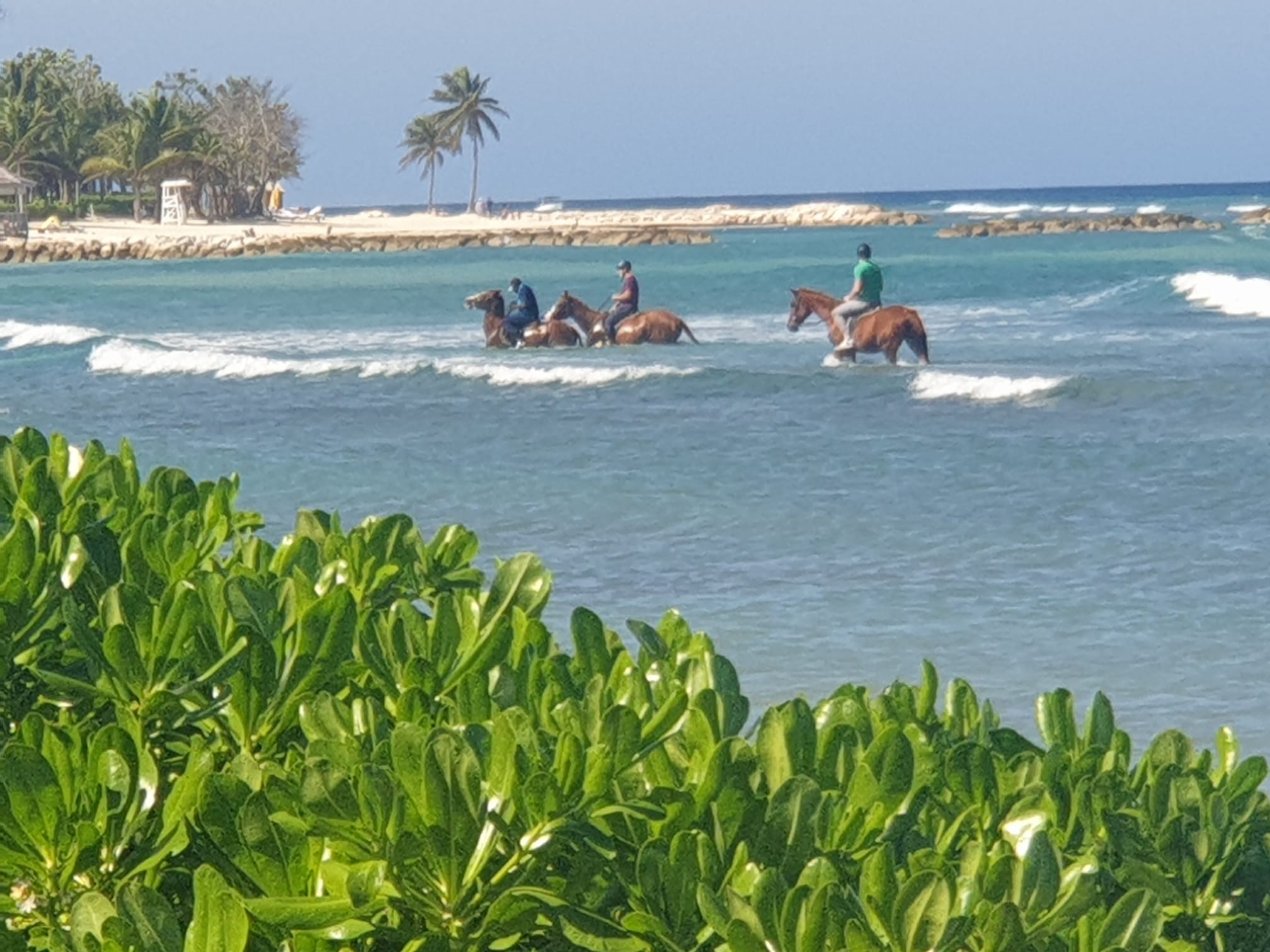
Some of my acquaintances at home thought I was traveling to Africa when I told them I was going to Jamaica. Geographically, that’s completely wrong, but it’s true that about 90% of today’s population descends from people brought over from Ghana during the 17th and 18th centuries and forced to work on sugar plantations. The climate in Jamaica is tropical and humid by the sea and temperate in the highlands. The lush vegetation grows with astonishing vigor everywhere. The plant life is breathtaking, and during breakfast, I could watch dolphins playing near the shore and hummingbirds that especially captivated me. The brown pelicans were another highlight.

Imagine floating in the warm sea, and suddenly, just a few meters away, a huge bird dives headfirst into the water, hoping to catch a fish – though, from what I observed, they’re not very successful. The way they hunt is fascinating: they fly low over the water, suddenly climb higher, and then drop like a stone headfirst into the sea. They seem to have some protective mechanism to avoid injuries from such repeated plunges, as they dive from heights of 10 to 15 meters.

For anyone planning a trip to Jamaica and wondering what to visit, I recommend some popular but worthwhile tourist spots. Rick’s Café in Negril is great for those who enjoy jumping from great heights into crystal-clear water. Be careful, though – the rules are strict, and daring jumps like backflips are prohibited. The Dunn’s River Falls are another highlight, where you can climb through spectacular waterfalls from the sea to incredibly clear freshwater. A visit to a botanical garden or a bird-watching station, where you can observe hummingbirds up close, is also highly recommended.

The rest depends on your preferences – whether you’re into sports, relaxation, or adventure. And, of course, the sea: I could never get enough of it, especially at night when the sounds of nocturnal animals join the waves.

For safety: as long as you follow the same precautions as in other major cities, traveling in Jamaica is safe. I got lost a few times with the rental car, but apart from encountering some massive potholes, I only met helpful and friendly people. One thing to note: road signage in Jamaica is quite poor. Towns are rarely signposted, and one-way streets are often not clearly marked. Several times, locals had to help me navigate out of one-way street mazes. Even though they tried to explain how to identify one-way streets, I didn’t fully grasp it, and unfortunately, Google Maps wasn’t always a reliable guide either.

As for food: it’s best to eat where the locals do, rather than just in hotels. The food on the island is generally very meat-heavy for my taste, but fish is almost always an option. Surprisingly, vegetables are rare on menus, and it’s best to buy fruit at roadside stalls.

Last but not least, the music and Bob Marley: Bob is omnipresent – in countless pictures on walls, in songs, and in stories. Listening to a local band playing “One Love” by the sea in the evening is an unforgettable experience. Falling in love with Jamaica becomes almost effortless.

The Story of Irene Bobelijn – A Weekend in Antwerp


A few years ago, I had the pleasure of visiting the Immigration Museum in New York. It was a fascinating yet eerie experience. Imagine trying to escape hunger and poverty by emigrating from Europe to the United States. After weeks aboard a ship on rough seas, you finally arrive in New York. The authorities conduct various tests and then inform you that one member of your family cannot enter the country and must return to Europe. What would you do? Would you all go back together? Would you send the person back alone, or would you split up? These were the questions I asked myself back then, and to this day, I still recall the unease I felt in that exhibition in New York as I tried to put myself in that situation.

Now, I’m spending a weekend in Antwerp and visiting the Red Star Line Museum. This museum tells the
story of the starting point for many emigration journeys from Europe to America. Countless Europeans embarked for America from Antwerp, driven by the same reasons people migrate today: lack of economic opportunities, poverty, and persecution. The museum, located in the port area, is definitely worth a visit, and it was here that I heard one of the most breathtaking stories from our tour guide.

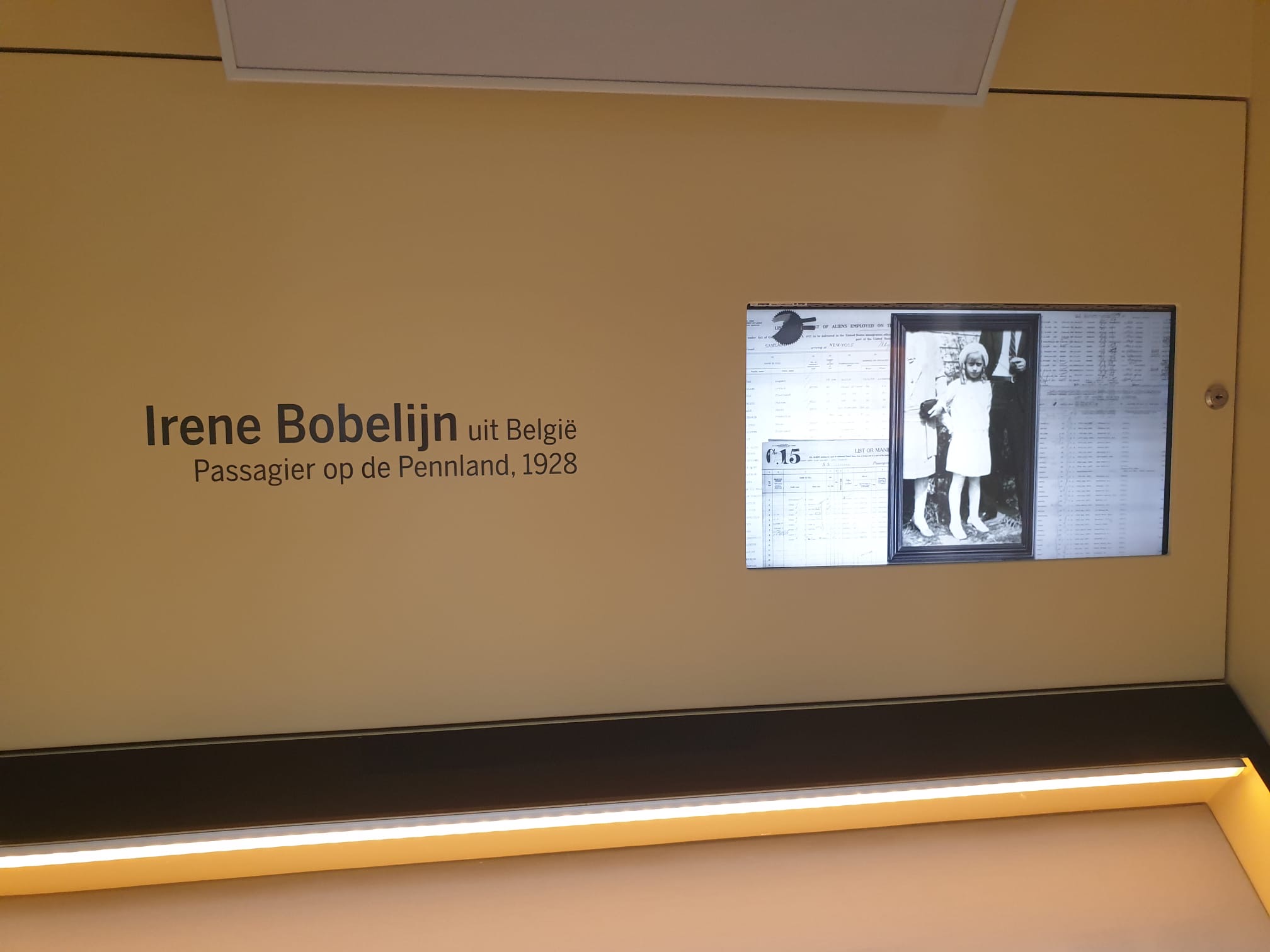
The story is about the Bobelijn family. The father emigrated to the USA first, while the mother stayed in Europe with three boys and little Irene. After the father had settled in the USA, he sent for his family. The mother and her four children boarded a Red Star Line ship bound for the USA. The journey in third class was far from a vacation: cramped conditions, no privacy, monotonous food, and perhaps even seasickness. Upon arriving in New York, eight-year-old Irene was diagnosed with a contagious eye disease. She was not allowed to enter the USA, while the rest of the family was granted entry.


Imagine having to make such a decision: Your husband, whom you haven’t seen for years, is waiting for you on the shore, and you must decide whether to return to Europe with everyone and try again later or send little Irene back alone. An option where the boys joined their father while the mother stayed with Irene was not allowed, as the authorities would not permit unaccompanied minor boys to enter the country. What would you have done?

The mother sent little Irene back to Antwerp alone. A year later, Irene tried again, but she was rejected and had to return once more. She lived another four years with a foster family, and it wasn’t until her third attempt that she was finally allowed to enter the USA. A true nightmare for any child and family. Stories like this likely still happen every day in various forms, though they are often unimaginable to us. Perhaps, 80 years from now, our descendants will hear about the stories of today.

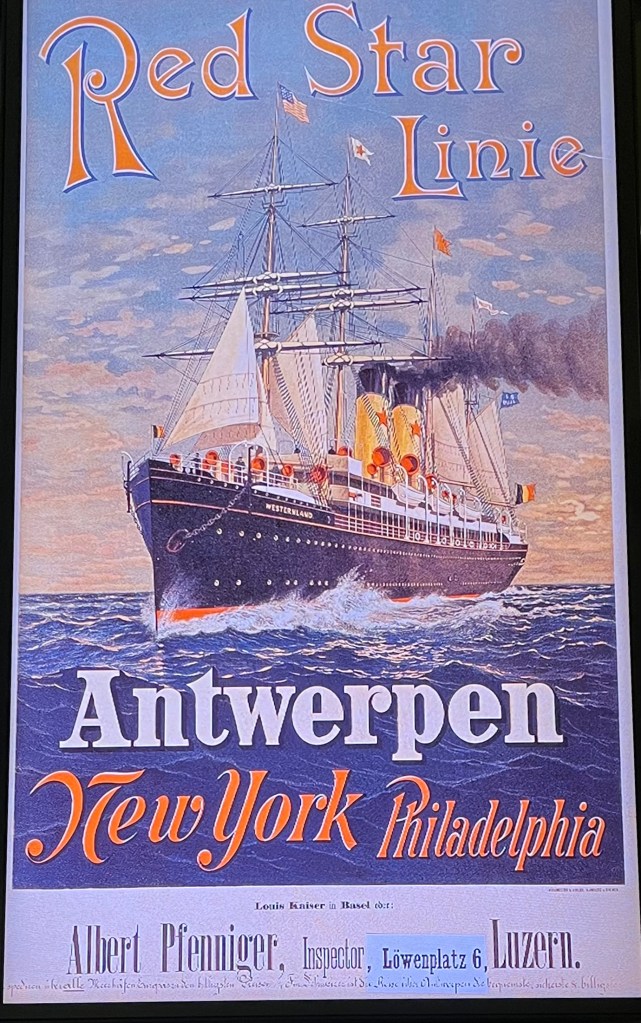
It was also fascinating to learn that the Red Star Line had a European sales network for ticket distribution. In Switzerland, the office was located in Lucerne. If you have ancestors who emigrated to America, you can search for them in digitized archives.

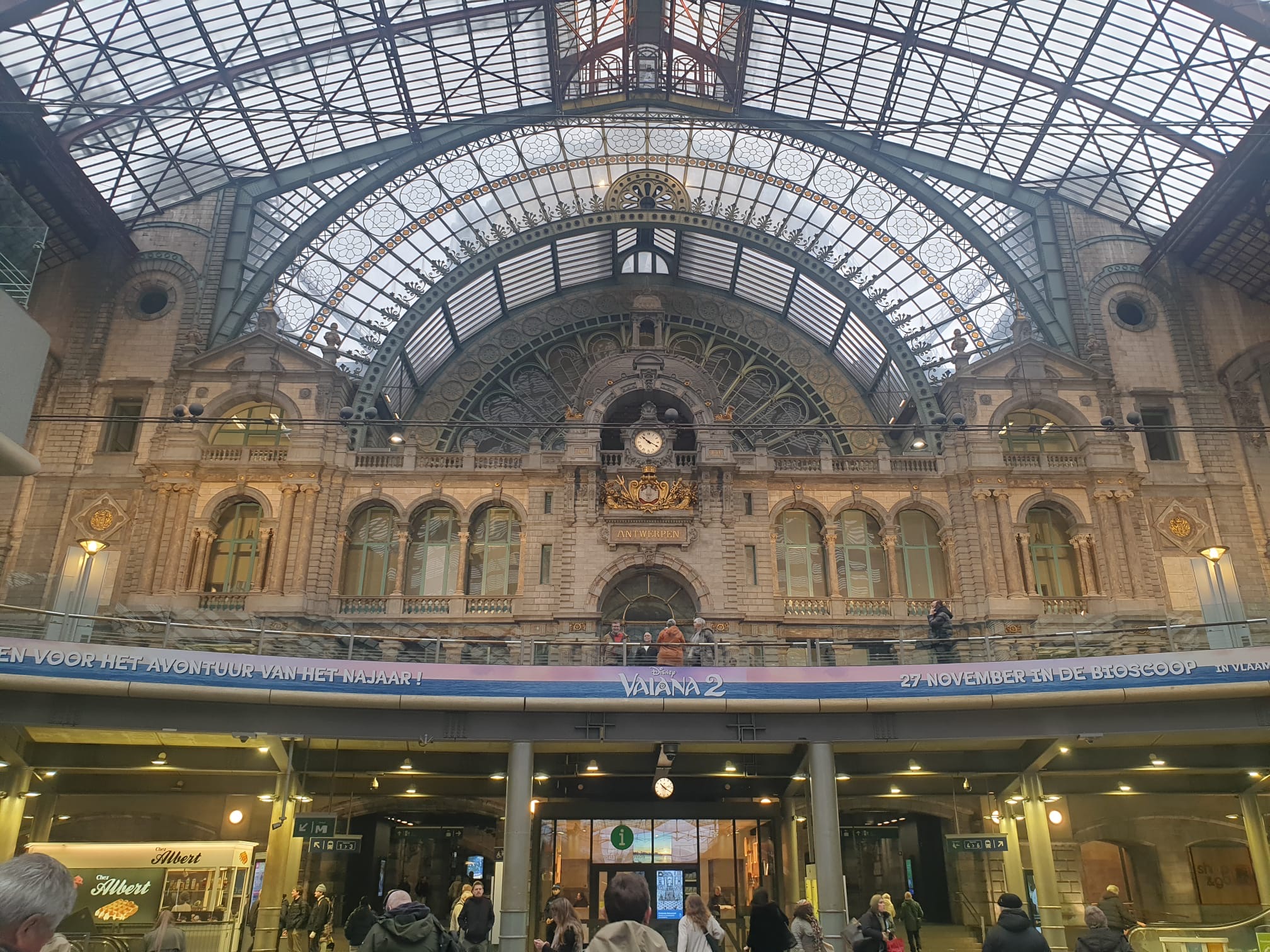
Antwerp was a true discovery for me. It’s a city well worth visiting. For example, the numerous Rubens paintings in the incredibly vast cathedral, the lively old town, the relaxed atmosphere despite the crowds, the fact that in November people still eat, play cards, discuss, and laugh outdoors late into the night, the harbor, the museums, the impressive train station hall, the countless fascinating buildings in the city, as well as the many restaurants and museums. If you have a few days, Antwerp is highly recommended—even in the fog.

Fog in the Swiss Plateau


I live half an hour from Zurich. It’s a fantastic place with very friendly people and an amazing lake. I have an incredible panoramic view over the mountains and the lake. One look out the window is better than watching TV. Except from November to February. Then, we’re plagued by fog. But what fog! On some days, it’s so white and thick that it reminds me of baby food. Eating baby food is one of my fondest childhood memories, but being surrounded by it is just gross. The fog is very persistent, easily sticking around from morning until night. You can’t see anything. Absolutely nothing. Just gray, white, or black. The difference between day and night can only be detected by the brightness. After a few hours in this thick fog, I start feeling physically ill. Not just a little bit – truly unwell. Two things help: exercise and sunshine.

The fog has now lingered for several weeks. It’s not as impenetrable as it can be in February, but it’s there every single day, without a break. I can’t stand it anymore. In Switzerland, there’s a remedy: drive for an hour and a half, and you can escape. So, I headed to Interlaken. I needed to get up into the mountains because the fog line is at 1100 meters, and above that, beautiful, cloud-free sunny days await. It was still dark in the morning, and you could tell dawn was coming only by the shift from blackish-milky to grayish-milky. I set off, and about an hour into the drive, the first sunbeam greeted me like a good morning kiss. You can see the thick fog lying below, like a cushion left behind, while enjoying the still-green slopes of the mountains (snow is coming soon) and the sunshine.

Ahead of me was a hike up to the Gemmenalphorn, at an altitude of 2061 meters. Clearly, many others had the same idea – it was far from a lonely ascent. It felt more like a migration. It was a good feeling, though, because everyone was greeting each other, as if meeting neighbors. Everyone out today seemed cheerful and was smiling at one another. What a brilliant day! My breathing started complaining a bit, especially on the last part of the trail, as it was truly steep. I had no desire to slow down, though. I might have sore muscles tomorrow; we’ll see. With each step and every drop of sweat, I felt better. It was pleasantly warm, with most people just in T-shirts, a sweater was enough, and you could easily leave your jacket in your backpack.

At the start of the hike, I came across an old house. All the windows and doors were open, and I could hear the sounds of demolition work inside. In front of the house was a dumpster filled with old wood and other debris. Curious, I took a look inside. They were just tearing down the thin wooden wall between the kitchen and living room. Back then, newspapers were used as insulation. I picked one up off the floor and saw it was from August 1945. It was perfectly preserved, so I flipped through it. It was much thinner than today’s papers, with most of it dedicated to advertisements. I read a real estate ad offering a villa with 9 rooms, a 2000 m² garden, and a stunning view in Zurich for 220,000 Swiss francs. Too bad my grandparents didn’t have the funds to buy such a property. It would probably be worth tens of millions today.

The climb rewarded me with an unbeatable 360-degree view. I could sit here for hours in the sun on the dry grass, taking in the vast landscape, the surrounding mountains with already snow-capped peaks, and the lake below. But as it gets cold and a bit uncomfortable after sunset, I took a half-hour break and then began my descent into the valley, watching the many paragliders launching from the slopes and gliding down to the valley below.

Summary I can confirm that the best cure for the fog blues is sunshine combined with exercise. Good shoes and a bottle of water are highly recommended. Unfortunately, I forgot my water bottle on Saturday. It made drinking at the bottom even better!

You won’t get to Ascona with prejudices


I’m on my way to Ticino. I can’t wait to be there. When travelling through the alps, I feel like I’m in a different world. The spirit is relaxed and you feel like you are breathing in a completely different air. To put it short, I am very excited. I travel by train, after all, it’s the quickest way.

Read More »

Public transport in Prague


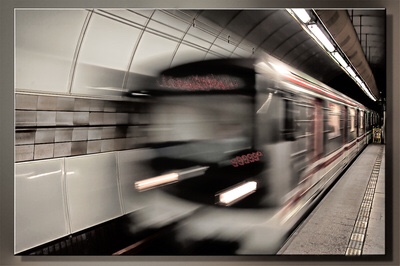
On the bus, the tram or the underground we always played the same game. The winner is the one who can ride longest without holding on with their hands. That may be dangerous, but in most cases children don’t think about such things. Then it was great fun and really challenging. With time on certain stretches I became a real champion. I knew the curves, I knew where it was quickly braked and I developed tactics to shift my balance very quickly. Very often I emerged from these competitions with my classmates as the winner. Much of this training helped me later in fencing. Such trainings should not be copied!!!! Tooth repairs are very expensive.

Today I am also travelling by public transport in Prague. But with the common sense of an adult and most of the time I keep one hand on a pole. But very often that is not enough. The sudden braking of the busses or the curves (the busses have become much longer) frequently bring me into demanding situations, where one hand is not enough. The more concerned I am when time and again I see people aged 70 or more, who climb into a bus, refuse the seats offered them, wrap themselves round the pole near the doors and try to keep their balance standing. I could never understand why they do so. Why don’t they sit down, especially when they are offered a seat.

Some time ago I discussed this with my father. For a few years he has been partially disabled but he also refuses to sit down. He explained that sitting down and standing up and that at a short interval requires more strength then standing. In addition he (and probably the others also) are afraid that if he sits too far away from the exit he will not be quick enough to get off. Ending up one stop further than desired, is for him a horror scenario. His arguments make sense to me. But I thought that although we are an impatient society which unfortunately no longer shows much respect for age, we are not so bad that the bus would not be prepared to wait while someone gets off slowly. It is enough to draw attention to oneself. An angry glance by an impatient person is only a glance…
We left the discussion with both me and my father stuck to their conviction.

On Sunday afternoon I got on the bus. After two stops four elderly, very smart ladies got on. Two of them had very funny hats. Two sat down and two remained standing. The bus began to move. The four chatted in a friendly manner, laughed and behaved themselves like respectable school girls. And as so often the bus had to brake sharply. The lady standing nearest to me flew through the air towards me.  I was able to catch her and prevent her from falling to the floor. I grasped her arm until she could stand properly and the bus also came to a stop. “And now sit down”, I ordered her. ” Do you know what it would be like, if you had broken your leg?”, I added. She looked at me in astonishment and apologetically. The other two made room for her and she sat down immediately. Perhaps I was too harsh, but I was really concerned about her. At the same time I hope that the experience will be a lesson to her. But I’ll probably never find out.

Business sense


I arrived in Frankfurt. As I so often do, I booked my taxi via Uber. It was there, before I could reach the location. My destination was far away from the airport. The trip was correspondingly expensive. With Uber I have noticed that the trip from the airport to the destination is a third to a half cheaper than the identical distance back to the airport. Regardless of the time of day. However my main concern was the return trip.


I knew that I would be travelling at the peak traffic hour and that right through the centre of the city. Therefore I asked my driver how much time I should reckon with in the late afternoon to be at the airport by 6.00 p.m. To my great surprise he said it didn’t make any difference. So, problem solved. He offered to pick me up. I thought that was a good offer. After all I knew the price in advance and I was aware that he would earn his money without the Uber service charge. That was also OK. But when I receive such offers, I am sceptical. Who knows whether he will really come. But at 5.00 p.m. after all my meetings, he arrived punctually at the agreed meeting place and was waiting for me. I asked him the price in order to avoid any negative surprise at the airport. I was greatly surprised when the price was much less than I had paid in the morning. But then I was sitting in the car and was on the way to the airport.

I asked him how he came to the price and he explained to me that he didn’t have to pay a charge to Uber and also any other taxes. That made me suspicious. I didn’t want to be any part in tax evasion, but I realised that my power is very limited. I tried to reassure myself with the fact that perhaps he will declare the income in his tax return, but that worked only for a few seconds. It was clear to me that, given what he had said, that was very unlikely. At the airport I asked for a receipt, but he didn’t have any and didn’t want to give me one. The price fell by another 5 Euros. I paid cash and left the Uber with an uncomfortable feeling. That in this way he earned more for himself than with Uber, was OK for me. After all, Uber had earned well on my first trip.

But defrauding the state made me think, as I had no idea how I could have prevented him. I believe that the state must receive the taxes which are due to it in order to fulfil its obligations. But I am not sure how I would react another time to such a taxi offer. Do I accept? Shall I refuse? What would you have done?

Thommy Weiss / pixelio.de

How to lose customers


I’m a fan of UNIQLO. That is the shop, which only recently has started to clothe Roger Federer and the shop, which does not exist in Switzerland.

I discovered UNIQLO by chance, when I was travelling in New York. I was on foot on my way back to my hotel from a client and suddenly it began to bucket it down. I didn’t have an umbrella with me and needed shelter and the next doorway was into this shop. I don’t like shopping. Or rather, with the thought that I again have to buy new clothes, I get goose pimples. The idea that I’ll have to undress and dress and then undress again and again have to dress and nevertheless nothing fits, is simply unbearable.Read More »

London


This slideshow requires JavaScript.

I’m working for a few days in London. Right in the centre with all the sights close by. It is a bitterly cold January, when you stay outside only if you have to.

I check into the hotel. I have the corner room at the end of the corridor. The door to the room is full of smaller and larger indentations. As if someone had tried with brute force and a sharp object to force an entry. I hope it was a one-off that is not repeated in this room every night. Only once in my life have I experienced how a drunk tried to force his way into my room. In the middle of the night that was scary, because I could scarcely estimate how long the door would hold. The door was stronger than I thought and then I had no visitor and I still don’t want one.

From the window I have a breath-taking view, but the room temperature is very low. I turn the heating up to maximum, but after an hour it is obvious that this heater has no more to offer. I’ll have to go to the reception and ask for an additional blanket.

But now I have to cross Tower Bridge to reach the restaurant, in which I have agreed to meet someone. I set out. It is at most 20 minutes by foot. I cross the road and enter a small park beside the Thames. And suddenly I feel rapid movements along the ground and quickly look around. But it is dark and difficult to tell what it was. I guess it was a rat but I’m not sure.

The dinner was very interesting and useful and shortly before 11.00 I set out back to the hotel. I walk across the bridge, which is wonderfully illuminated in light blue. Despite the cold there are still a lot of people about. I turn into the small park, which is empty and deserted. But I feel a lot of movement on the ground and suddenly I hear a painful squeaking and feel something under my winter boots. I have stepped on a rat’s tail. We are both startled. And the rat also felt the pain.

It is not alone. On the ground there is a great deal of activity. Perhaps it is the now closed wooden refreshment kiosk and even more the rubbish bin next to it which is the reason why the rats live in the centre of London, so close to all the sights.

When I told Dana this story, she told me that today she was present at the birth of 25 baby rats from two mother rats that come from 2 father rats, which were sold to her as castrated.

Life is obviously full of surprises.