Jamaica – Christmas with James Bond


I love fairy tales. It’s comforting to know that good will always triumph over evil. Always! Otherwise, it’s not a fairy tale. For me, James Bond, created by Ian Fleming, is nothing less than a fairy tale for adults. Good triumphs over evil. Always! Otherwise, it’s not a proper James Bond story.

A friend recently told me how Ian Fleming came up with the name James Bond. Fleming was looking for an ordinary, rather boring name. In his library, he had a large bird encyclopedia. The author: James Bond. Whether the story is true or not, I don’t know, but I find it fascinating. James Bond, the bird expert who regularly saves the world.

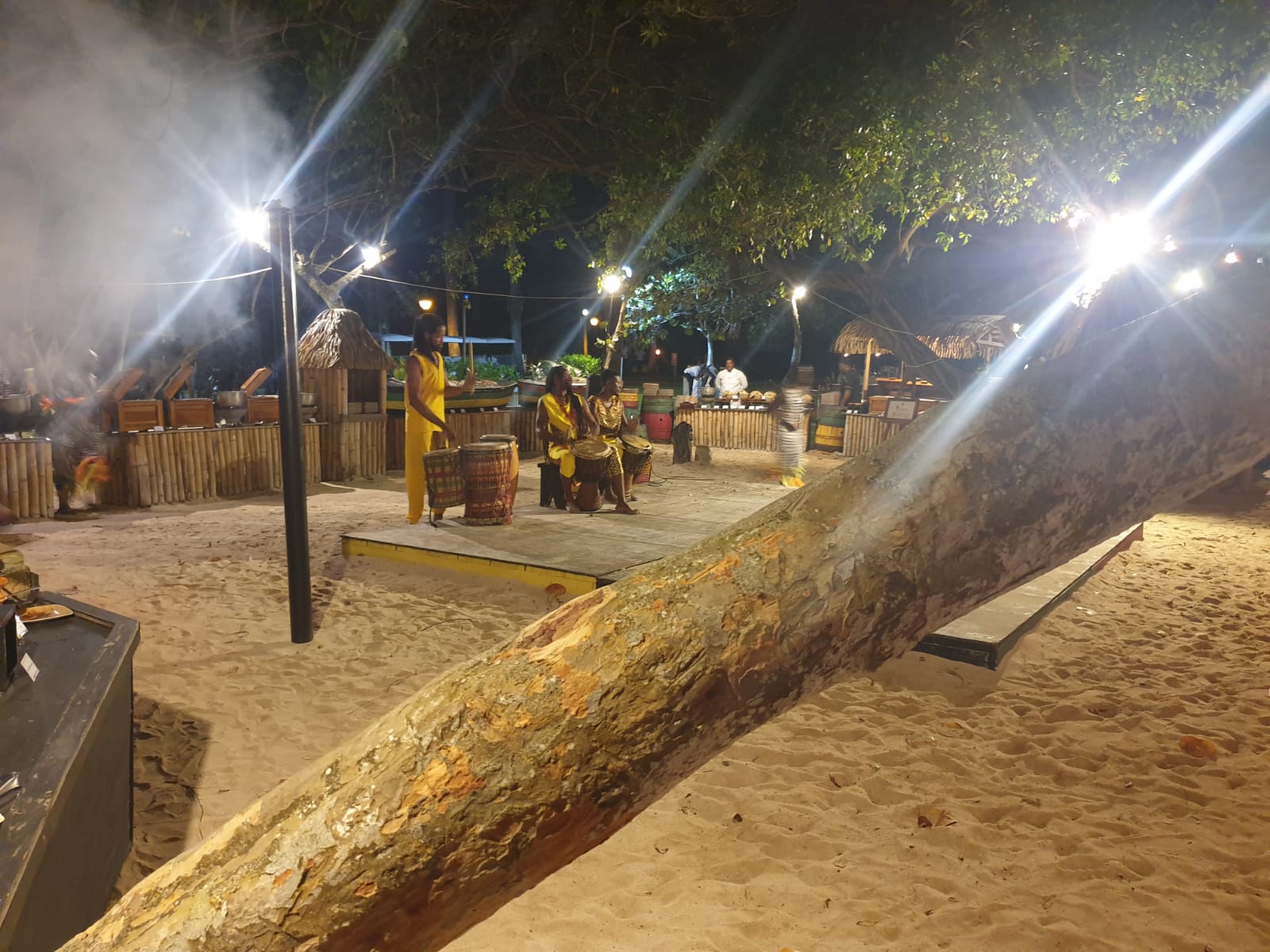
This Christmas, I’m spending time in Jamaica. Not really because of James Bond, but for the good weather, the sea, the breeze, and the music. It’s my first time here, and it’s an experience worth having. However, the start of my trip was a bit bumpy. My flight was delayed, and I was worried the car rental office might already be closed. Thankfully, that wasn’t the case. The lady was still there and handed me the keys.

The surprise came when she told me that the fuel tank was empty. And it really was empty! As soon as I started the engine, the fuel gauge showed that I needed to refuel – emergency reserve! I asked where the nearest gas station was, and she told me: straight ahead and then left. That didn’t sound very reassuring. The car didn’t have navigation, and it was pitch dark outside.

I drove off and, to my great relief, found a gas station about three kilometers away. But it was completely deserted. I went from pump to pump, trying to figure out how to refuel. It was dark, in the middle of the night, and I was starting to get a bit nervous. Slowly, I realized that I couldn’t refuel at this station using either cash in any currency or my credit card.

Feeling uneasy, I looked up the next gas station on the map. Spending the night stranded in a car with an empty tank in the middle of nowhere was not a pleasant thought. Suddenly, three cars came screeching into the gas station. No, I wasn’t robbed, and no, I didn’t have to spend the night in the car. I found another nearby gas station and was finally able to fill the tank.
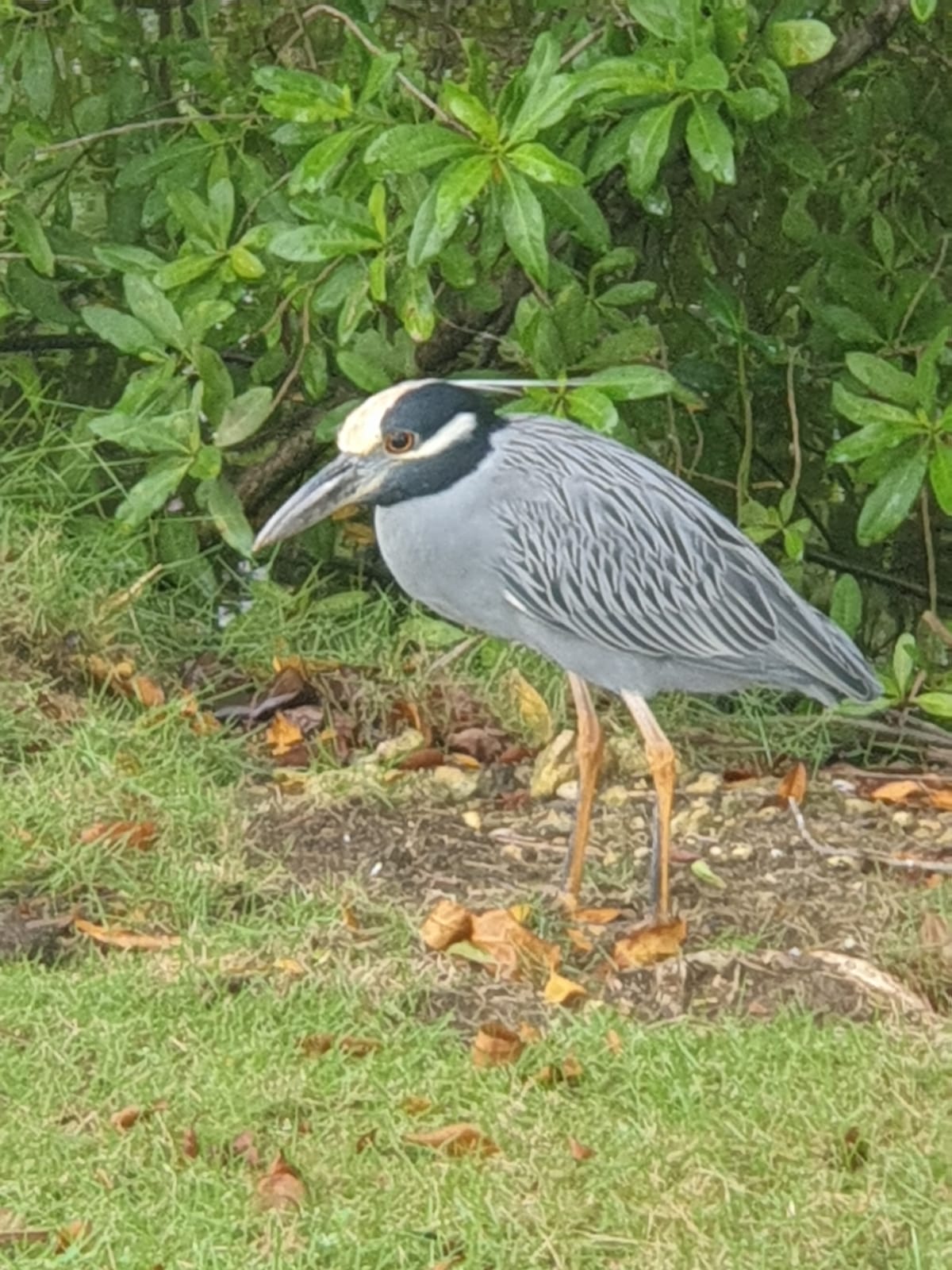
Jamaica has so much to offer. I was especially fascinated by the hummingbirds and the plant life. The island is incredibly green, water is abundant, and a rain shower here is quite an experience. The quality of drinking water is exceptionally high. You can visit bird sanctuaries, botanical gardens, or adventure parks. You can climb waterfalls or ride a raft.

The music, the dancing, and chatting with the locals make Jamaica truly special. The people are friendly, helpful, and everyone has time for a chat. I can completely understand why Ian Fleming wrote his books here.

Jamaica – Christmas with James Bond


I love fairy tales. It’s comforting to know that good will always triumph over evil. Always! Otherwise, it’s not a fairy tale. For me, James Bond, created by Ian Fleming, is nothing less than a fairy tale for adults. Good triumphs over evil. Always! Otherwise, it’s not a proper James Bond story.

A friend recently told me how Ian Fleming came up with the name James Bond. Fleming was looking for an ordinary, rather boring name. In his library, he had a large bird encyclopedia. The author: James Bond. Whether the story is true or not, I don’t know, but I find it fascinating. James Bond, the bird expert who regularly saves the world.

This Christmas, I’m spending time in Jamaica. Not really because of James Bond, but for the good weather, the sea, the breeze, and the music. It’s my first time here, and it’s an experience worth having. However, the start of my trip was a bit bumpy. My flight was delayed, and I was worried the car rental office might already be closed. Thankfully, that wasn’t the case. The lady was still there and handed me the keys.

The surprise came when she told me that the fuel tank was empty. And it really was empty! As soon as I started the engine, the fuel gauge showed that I needed to refuel – emergency reserve! I asked where the nearest gas station was, and she told me: straight ahead and then left. That didn’t sound very reassuring. The car didn’t have navigation, and it was pitch dark outside.

I drove off and, to my great relief, found a gas station about three kilometers away. But it was completely deserted. I went from pump to pump, trying to figure out how to refuel. It was dark, in the middle of the night, and I was starting to get a bit nervous. Slowly, I realized that I couldn’t refuel at this station using either cash in any currency or my credit card.

Feeling uneasy, I looked up the next gas station on the map. Spending the night stranded in a car with an empty tank in the middle of nowhere was not a pleasant thought. Suddenly, three cars came screeching into the gas station. No, I wasn’t robbed, and no, I didn’t have to spend the night in the car. I found another nearby gas station and was finally able to fill the tank.

Jamaica has so much to offer. I was especially fascinated by the hummingbirds and the plant life. The island is incredibly green, water is abundant, and a rain shower here is quite an experience. The quality of drinking water is exceptionally high. You can visit bird sanctuaries, botanical gardens, or adventure parks. You can climb waterfalls or ride a raft.

The music, the dancing, and chatting with the locals make Jamaica truly special. The people are friendly, helpful, and everyone has time for a chat. I can completely understand why Ian Fleming wrote his books here.
The Story of Irene Bobelijn – A Weekend in Antwerp


A few years ago, I had the pleasure of visiting the Immigration Museum in New York. It was a fascinating yet eerie experience. Imagine trying to escape hunger and poverty by emigrating from Europe to the United States. After weeks aboard a ship on rough seas, you finally arrive in New York. The authorities conduct various tests and then inform you that one member of your family cannot enter the country and must return to Europe. What would you do? Would you all go back together? Would you send the person back alone, or would you split up? These were the questions I asked myself back then, and to this day, I still recall the unease I felt in that exhibition in New York as I tried to put myself in that situation.

Now, I’m spending a weekend in Antwerp and visiting the Red Star Line Museum. This museum tells the
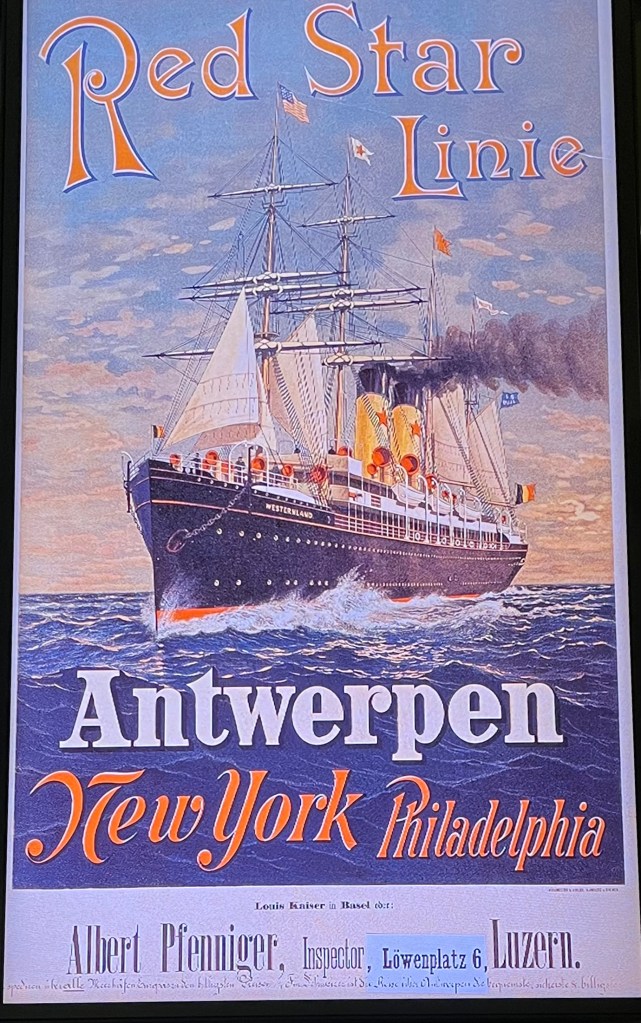
story of the starting point for many emigration journeys from Europe to America. Countless Europeans embarked for America from Antwerp, driven by the same reasons people migrate today: lack of economic opportunities, poverty, and persecution. The museum, located in the port area, is definitely worth a visit, and it was here that I heard one of the most breathtaking stories from our tour guide.

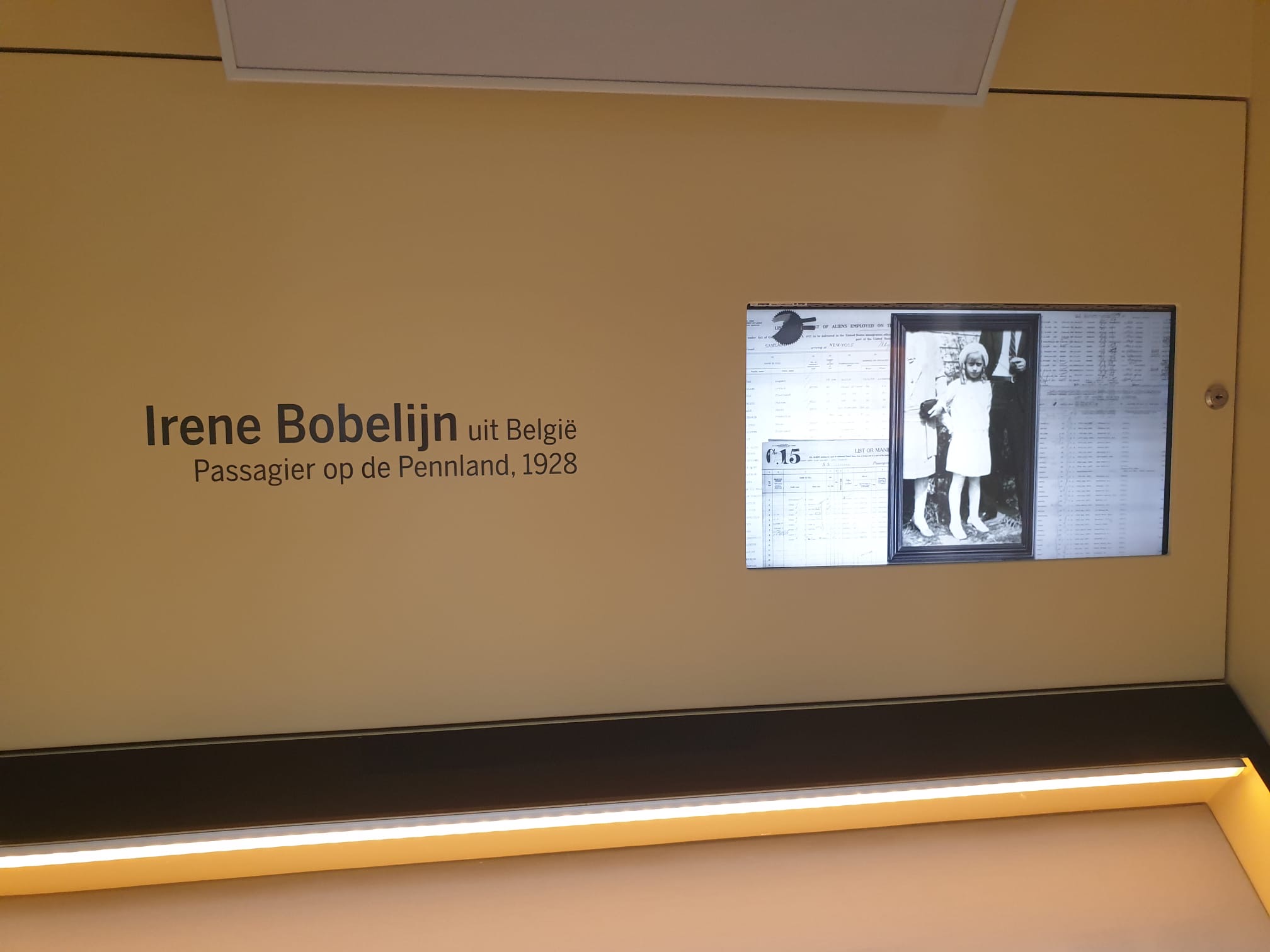
The story is about the Bobelijn family. The father emigrated to the USA first, while the mother stayed in Europe with three boys and little Irene. After the father had settled in the USA, he sent for his family. The mother and her four children boarded a Red Star Line ship bound for the USA. The journey in third class was far from a vacation: cramped conditions, no privacy, monotonous food, and perhaps even seasickness. Upon arriving in New York, eight-year-old Irene was diagnosed with a contagious eye disease. She was not allowed to enter the USA, while the rest of the family was granted entry.


Imagine having to make such a decision: Your husband, whom you haven’t seen for years, is waiting for you on the shore, and you must decide whether to return to Europe with everyone and try again later or send little Irene back alone. An option where the boys joined their father while the mother stayed with Irene was not allowed, as the authorities would not permit unaccompanied minor boys to enter the country. What would you have done?

The mother sent little Irene back to Antwerp alone. A year later, Irene tried again, but she was rejected and had to return once more. She lived another four years with a foster family, and it wasn’t until her third attempt that she was finally allowed to enter the USA. A true nightmare for any child and family. Stories like this likely still happen every day in various forms, though they are often unimaginable to us. Perhaps, 80 years from now, our descendants will hear about the stories of today.

It was also fascinating to learn that the Red Star Line had a European sales network for ticket distribution. In Switzerland, the office was located in Lucerne. If you have ancestors who emigrated to America, you can search for them in digitized archives.

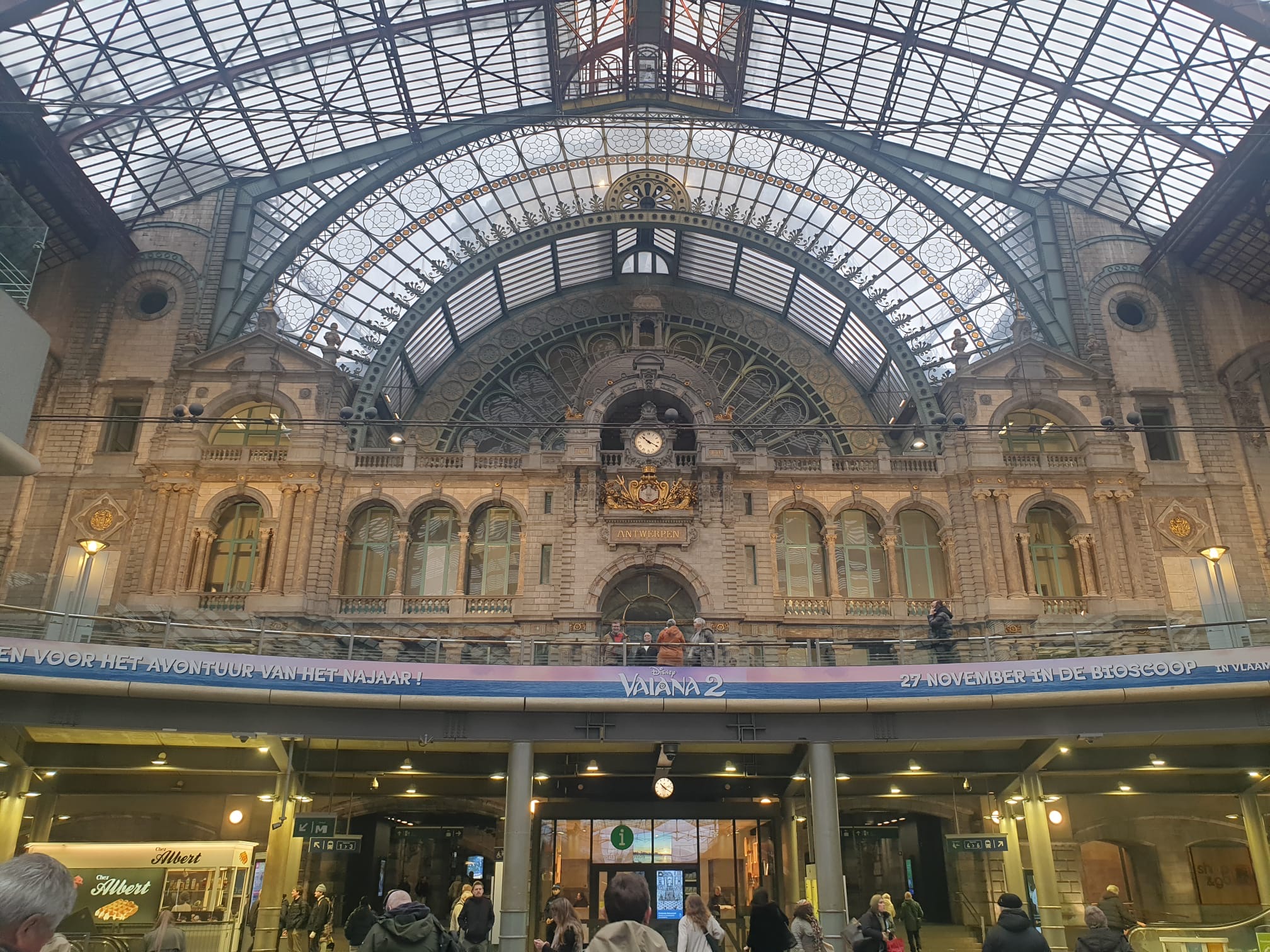
Antwerp was a true discovery for me. It’s a city well worth visiting. For example, the numerous Rubens paintings in the incredibly vast cathedral, the lively old town, the relaxed atmosphere despite the crowds, the fact that in November people still eat, play cards, discuss, and laugh outdoors late into the night, the harbor, the museums, the impressive train station hall, the countless fascinating buildings in the city, as well as the many restaurants and museums. If you have a few days, Antwerp is highly recommended—even in the fog.

The Marriage of Norma and Thomas


I had dinner plans. As soon as I arrived at the restaurant, my phone rang, and my best friend explained that she was stuck in traffic and would be at least half an hour late. That’s nothing unusual, it happens almost every time. I didn’t get upset. I wanted to read my emails, but the conversation at the next table drew me in and fascinated me. I listened. The volume made it easy to follow without any effort. Here’s what I heard:

Norma and Thomas met at university. Both were studying law. After successfully completing their degrees, they both went on to obtain their law licenses. They moved in together and planned their future. They had agreed on having two careers and sharing family responsibilities. It’s now been 33 years since they got married. In the first year of their marriage, a son was born. He was born with a heart defect. By the time he turned three, he had undergone three surgeries. That time was extremely difficult for everyone, as it was uncertain whether the boy would survive, and if he did, whether there would be lasting developmental issues. With all the doctor’s appointments, Norma returning to her demanding job was out of the question. Norma stayed home and fought with all her might for her son’s life and health. After four years, they could finally say they had made it. Shortly after, a daughter was born, and then another daughter. With three children, one of whom still had some health concerns, and the limited childcare options in Switzerland, it was unthinkable for Norma to return to the professional world.

In the beginning, after the birth of their first son, Thomas was very involved and supported Norma, even attending some of the medical appointments with her. But this only lasted until it was clear that the boy would survive. After that, Thomas reduced his involvement significantly, and eventually, it was Norma who became the family manager while Thomas earned the money. He was an excellent lawyer and made a lot of money. From then on, all family-related appointments were organized solely by Norma. Thomas never attended a single school meeting. Their lives over the past 33 years unfolded in the same space but as if in parallel worlds.

By now, all three children have moved out. The son is working, and the two daughters are still studying, but no longer live at home. The departure of the last child hit Norma hard. Norma and Thomas’s daily routine always looked the same: In the morning, Thomas got ready for the office, kissed Norma on the forehead, and left for work without saying when he would be back. Norma cooked dinner but increasingly found herself eating alone, as Thomas worked late into the evening. When he finally came home, he was tired and hungry and didn’t want to talk. He ate dinner without saying thank you, then watched sports on TV. After that, he kissed Norma on the forehead and went to bed. Norma cleaned the kitchen and went to bed too.

They didn’t do much together on weekends either, as Thomas wanted to play sports and wasn’t really interested in cultural activities. Norma felt increasingly lonely.

That’s the background I understood. However, the conversation was actually about the fact that, over the weekend, Norma had suggested divorce to Thomas. She had prepared the divorce papers, including a proposal for dividing the assets and a solution for their living situation. Thomas was shocked and completely unprepared. Norma told her friend that he kept repeating that he couldn’t understand why. After all, they had such a great life. Norma wondered if she hadn’t told Thomas enough how unhappy she was with their life together.

At that moment, my best friend arrived, and I didn’t hear the rest of the conversation at the next table. I don’t even know if Thomas accepted the divorce. Honestly, I completely understood Norma’s need for change.

Klara and the twins


Klara is 26-years-old and went to visit the technical library with her 4-year-old twins Dina and Tina. She wanted to get some books to be able to finish her work paper.

Read More »

Murdering books


I have moved. In the office from the 2nd floor to the 5th floor. One can describe it as a meteoric rise because the 5th floor is the top floor in our building. And at the same time from one city to another. Every move means separation. I’m a collector and over the years numerous objects and material memories have collected. At both new locations I have less room than before and I could take only a little with me (no furniture at all). That meant that something had to go. It took weeks to separate myself from what I had grown to love. 

Imagine it like a picture: I stand in front of my large library and pick up every book again. I note that certain books I have not touched in over 20 years, except to dust them. Do I need such a book? Will I read it ever again in my whole life? At the time I read it, but today I have only a vague idea of what it was about. But with many of these books there is associated a memory of the circumstances, in which I read it. Perhaps in summer, during the school holidays. For a time I used to climb up into our apple tree and, sitting in the branches, to read books. Suddenly, the book in my hand, there is a smell of ripe apples again. The time that belongs in the last millennium seems as if it were only yesterday. If I now give this book away, the memory will be lost.

Before, my books were sacred. If there had been a fire, I would probably have tried to save them all. My children knew that they had much liberty, but should they damage one of the books, paint it or otherwise spoil it, there’ll be a row. Only once had my eldest, as a 3-year old, painted a picture in one of my books. I flipped out and she realised that she had found my Achilles’ heel. Clever as she is, she never again made the same mistake.

But if I now separate from a book, what shall I do with it? Earlier, when one had read a book, one could sell it or give it away. That doesn’t work any longer, because no-one wants them. In addition, many of my old books are in languages, which one very seldom hears in Switzerland and practically never sells as books. Therefore, the only way to get rid of books today is as waste paper. But you can’t get rid of the whole book as waste paper. The book covers have to be separated from the pages. They can be cut off with a knife.

Although today, I am prepared to get rid of many books. I’ll never read them again, a murder of a book. But stab them in the back, that I can’t do. Very conscientiously and very generously, I sorted out a lot of books. I wasn’t comfortable doing so. I knew that their fate was destruction. My heart was weeping, but I continued the liquidation. But I couldn’t do it in one go, because emotionally it so drained me – I had to do it bit by bit. Therefore the sorting took weeks.

But damage the books with a knife, that I couldn’t face myself. I had to ask for help. I also couldn’t watch. That was too painful.

Now I have moved. I have unpacked all my clothes, my office. But not yet the books. I know that the books I’ve moved are angry with me, although they have survived. I understand them, after all they have lost a lot of acquaintances. I also mourn their loss.

Hairdresser


748195_web_R_K_B_by_I-vista_pixelio.deI go to the hairdresser a few times a year. My hairdresser Mauro is an Italian “magician”, who gives every one of his female customers the feeling of being a queen. That is pleasant and feels great.


I was there last Saturday. Mauro was charming as usual. Read More »

Romania – Decrease of the VAT rate from 24% to 20% as from 1 of January 2016


Romania decided to decrease the standard VAT rate from 24% to 20% with effect from 1 January 2016 and to 19% with effect from 1 January 2017. Also, the 9% reduced VAT rate previously applied will decrease to 5% VAT for the supply of school manuals, books, newspapers and some magazines, as well as for the supply of services consisting in the allowance of access to castles, museums, cinemas. The reduced rate of 5% VAT will also be applied for access to sportive events.
Read More »

Changes in the EU legislation


711122_web_R_by_FotoHiero_pixelio.de (1)4 Ministers of culture asked for change in EU legislation to tax e-books exactly as physical books.

Read More »

OECD – Consumption Tax Trends 2014 and The Distributional Effects of Consumption Taxes in OECD countries – reports published


Aerial view of people sitting in a public area - PwC, Photo_RGB_PC_ 446.jpgConsumption Tax Trends 2014
Tax landscape is shifting away from taxes on labour and corporate income towards more ‘growth friendly’ sources of revenue, like consumption taxes and property taxes. VAT is an important source of revenue for OECD countries, representing on average approximately 20% of total tax revenues. Read More »