
Before my departure, I had some concerns, mainly because of the many alarming reports I read during my preparations. The long list of required vaccinations and warnings about high crime rates – particularly the fact that the murder rate is among the highest in the Western Hemisphere – made me very uneasy. Even travel guides classifying Jamaica as a “medium-risk destination” didn’t offer much reassurance. The advice to “always be accompanied by someone you know, even when going to the restroom,” seemed excessively paranoid.
I’m not the type of person who frequents bars between midnight and dawn or feels the need to explore slums up close. At the beginning of my stay, I was very cautious and risk-averse. But if you’re not willing to venture out, you’ll never discover anything. With a rental car, I was able to explore a large part of the island. The north is different from the west and south, and every area is worth visiting. Jamaica is definitely worth the trip.


The island offers well-maintained areas with impressive villas and lush gardens, colorful wooden houses full of charm, as well as impoverished shacks and a few abandoned ruins. But where don’t you find such contrasts? I was especially fascinated by the ruins: some seemed old and abandoned, while others were unfinished constructions left incomplete for unknown reasons.
Sundays seem to be wash day – at least, that was the case on one bright, sunny day. Everywhere, colorful clothes flapped cheerfully on laundry lines in the wind. The people in Jamaica are relaxed, friendly, and always up for a chat. They are proud of their country and often asked me where I was from. Everyone I spoke to knew my home country – their geography lessons in school must be excellent!
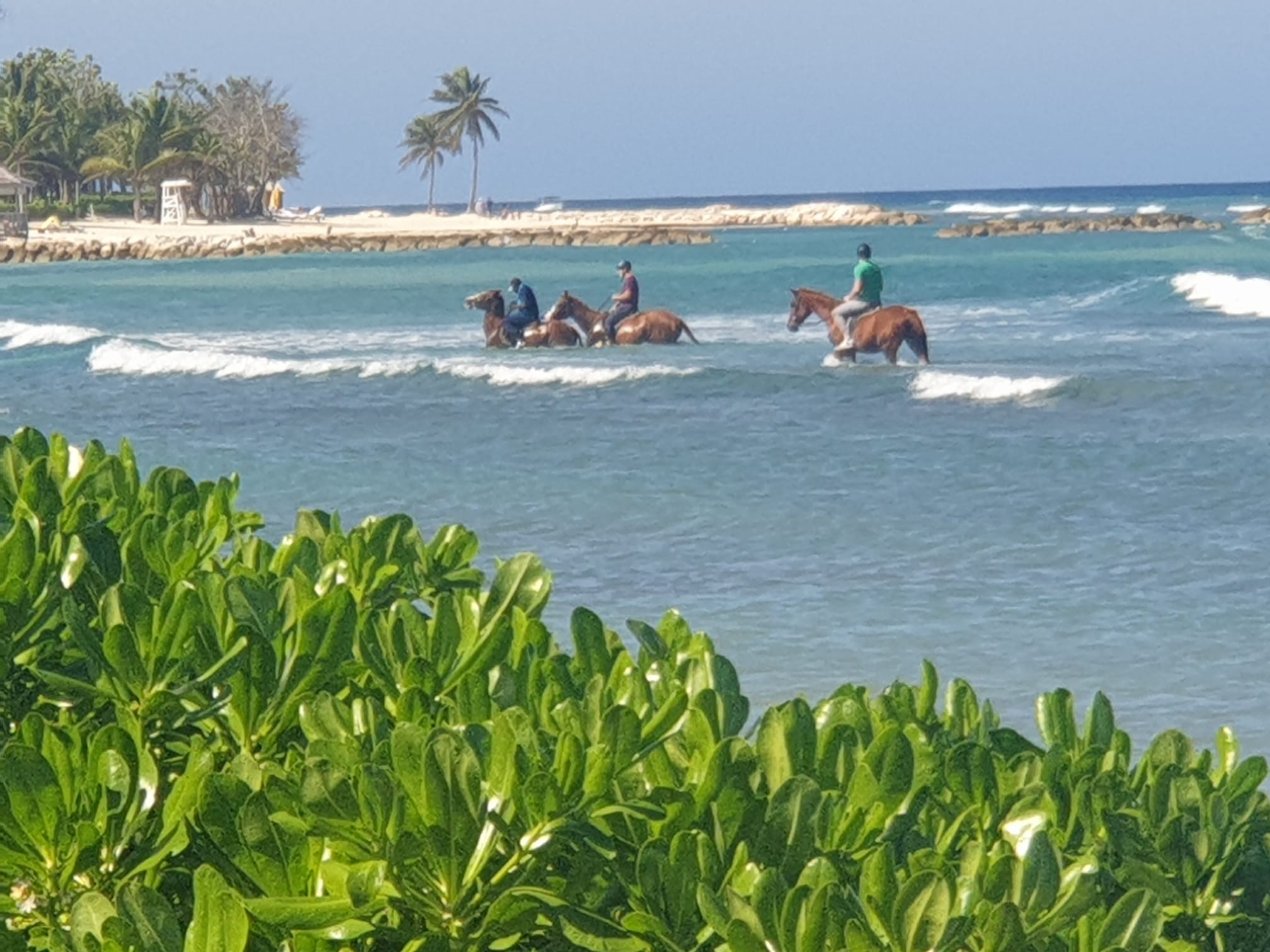
Some of my acquaintances at home thought I was traveling to Africa when I told them I was going to Jamaica. Geographically, that’s completely wrong, but it’s true that about 90% of today’s population descends from people brought over from Ghana during the 17th and 18th centuries and forced to work on sugar plantations. The climate in Jamaica is tropical and humid by the sea and temperate in the highlands. The lush vegetation grows with astonishing vigor everywhere. The plant life is breathtaking, and during breakfast, I could watch dolphins playing near the shore and hummingbirds that especially captivated me. The brown pelicans were another highlight.
Imagine floating in the warm sea, and suddenly, just a few meters away, a huge bird dives headfirst into the water, hoping to catch a fish – though, from what I observed, they’re not very successful. The way they hunt is fascinating: they fly low over the water, suddenly climb higher, and then drop like a stone headfirst into the sea. They seem to have some protective mechanism to avoid injuries from such repeated plunges, as they dive from heights of 10 to 15 meters.
For anyone planning a trip to Jamaica and wondering what to visit, I recommend some popular but worthwhile tourist spots. Rick’s Café in Negril is great for those who enjoy jumping from great heights into crystal-clear water. Be careful, though – the rules are strict, and daring jumps like backflips are prohibited. The Dunn’s River Falls are another highlight, where you can climb through spectacular waterfalls from the sea to incredibly clear freshwater. A visit to a botanical garden or a bird-watching station, where you can observe hummingbirds up close, is also highly recommended.
The rest depends on your preferences – whether you’re into sports, relaxation, or adventure. And, of course, the sea: I could never get enough of it, especially at night when the sounds of nocturnal animals join the waves.
For safety: as long as you follow the same precautions as in other major cities, traveling in Jamaica is safe. I got lost a few times with the rental car, but apart from encountering some massive potholes, I only met helpful and friendly people. One thing to note: road signage in Jamaica is quite poor. Towns are rarely signposted, and one-way streets are often not clearly marked. Several times, locals had to help me navigate out of one-way street mazes. Even though they tried to explain how to identify one-way streets, I didn’t fully grasp it, and unfortunately, Google Maps wasn’t always a reliable guide either.
As for food: it’s best to eat where the locals do, rather than just in hotels. The food on the island is generally very meat-heavy for my taste, but fish is almost always an option. Surprisingly, vegetables are rare on menus, and it’s best to buy fruit at roadside stalls.
Last but not least, the music and Bob Marley: Bob is omnipresent – in countless pictures on walls, in songs, and in stories. Listening to a local band playing “One Love” by the sea in the evening is an unforgettable experience. Falling in love with Jamaica becomes almost effortless.



 Michaela Merz