
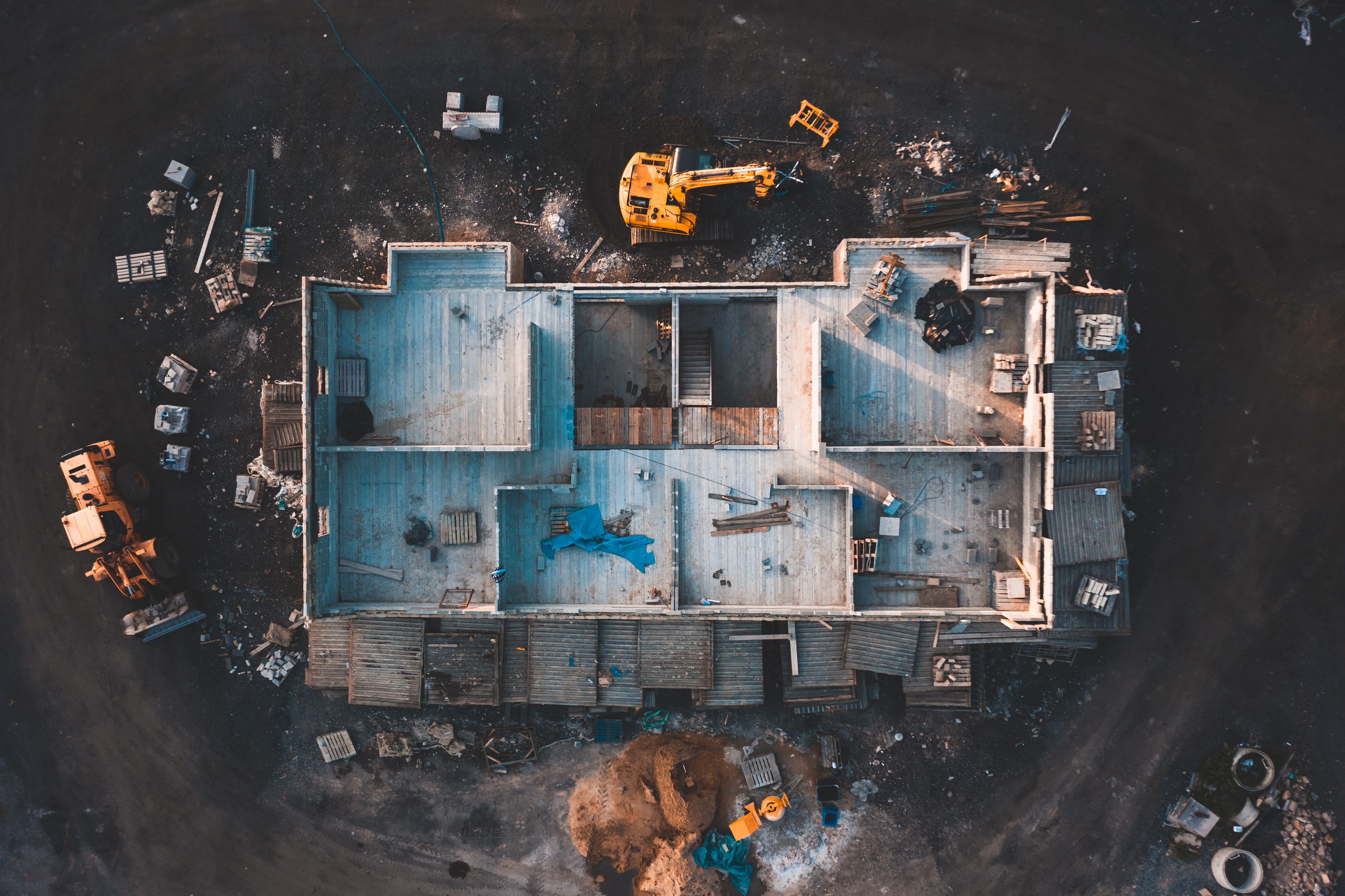
Once upon a time, there was an old apartment building near the airport. It was built in the late 1960s, featuring spacious floor plans, a beautiful garden – but also a poor energy performance with old windows, inadequate insulation, and a fossil fuel heating system. The building housed six apartments, each between 90 and 100 m². In five of these, only one person lived in each unit, and one apartment was occupied by a family. The rents were very low since most tenants had been living there for decades. Only the utility costs had surged to unbearable levels due to the gas heating costs skyrocketing since the war in Ukraine.
The owner decided it was time to modernize the building and improve its energy efficiency.
The objectives were clear: preserve the old structure (including the beautiful garden, even if that meant additional costs) and only replace what was absolutely necessary to keep rents low. Install an energy-efficient heating system. Ideally, the renovation should be carried out while the tenants remained in the building to avoid displacement.
Economically, it became apparent that adding extra floors would be necessary. The plan was to add two additional floors.
To avoid objections, the owner met with all the neighbors. All but one agreed to the plan. This one neighbor, however, stated that if two floors were added, his view would be obstructed, and he would file a formal objection. He had no issue with a single floor being added. Even though the likelihood of defeating the objection was high, the additional costs and uncertainty caused the owner to decide on adding only one floor, forfeiting 200 m² of potential living space.
Further analysis revealed that many of the original objectives could hardly be met. The water pipes and electrical wiring had to be replaced entirely, and the bathrooms had to be completely redone. Renovating while the building was occupied was therefore impossible. First goal: not achieved.
After submitting the building permit, it became clear that the garden could not be preserved either. In addition to the six existing garages and six outdoor parking spaces, the building authority required even more parking spaces, which meant paving over more than half of the garden. Along with the parking spaces, more than 35 bicycle parking spots were also required for the ten apartments, further reducing the garden area. After lengthy negotiations, a compromise was reached, but still, half the garden had to be sacrificed. The lush garden, with over 50-year-old shrubs and flowers, was turning into a barren landscape. Efforts to save some of the older plants (despite the gardener’s prediction that success was no more than 50% likely) were ultimately thwarted by the arrival of the Japanese beetle and a regulation that prohibited any plants or soil from being moved out of the municipality. Second goal: also not achieved.
The third goal, installing an optimal heating system, was the only one successfully accomplished. The building’s exterior was newly insulated, old windows were replaced with triple-glazed windows, the gas heating system was swapped for a heat pump, and photovoltaic panels were installed on the roof.
As for keeping renovation costs low, this goal was also not achieved. The many regulations largely prevented it. For instance, all the 50-year-old wooden interior doors had to be replaced due to fire safety regulations, costing thousands of francs, which inevitably had to be reflected in the rent. Not only parts of the apartments, but the entire building had to be adapted for disabled access, which led to further demolition of elements that otherwise would have been retained, increasing the cost for each of the ten units. The metal stair railing, which had served faithfully for 50 years, was deemed too dangerous and had to be replaced. In short, had the entire building been demolished and rebuilt, it would have been an ecological absurdity, but likely less stressful.
In the end, today’s regulations and procedures resulted in higher rents, the loss of over half the garden, and less living space than could have been built. What a sad fairy tale.




 Michaela Merz