
The Story of Irene Bobelijn – A Weekend in Antwerp


A few years ago, I had the pleasure of visiting the Immigration Museum in New York. It was a fascinating yet eerie experience. Imagine trying to escape hunger and poverty by emigrating from Europe to the United States. After weeks aboard a ship on rough seas, you finally arrive in New York. The authorities conduct various tests and then inform you that one member of your family cannot enter the country and must return to Europe. What would you do? Would you all go back together? Would you send the person back alone, or would you split up? These were the questions I asked myself back then, and to this day, I still recall the unease I felt in that exhibition in New York as I tried to put myself in that situation.

Now, I’m spending a weekend in Antwerp and visiting the Red Star Line Museum. This museum tells the
story of the starting point for many emigration journeys from Europe to America. Countless Europeans embarked for America from Antwerp, driven by the same reasons people migrate today: lack of economic opportunities, poverty, and persecution. The museum, located in the port area, is definitely worth a visit, and it was here that I heard one of the most breathtaking stories from our tour guide.

The story is about the Bobelijn family. The father emigrated to the USA first, while the mother stayed in Europe with three boys and little Irene. After the father had settled in the USA, he sent for his family. The mother and her four children boarded a Red Star Line ship bound for the USA. The journey in third class was far from a vacation: cramped conditions, no privacy, monotonous food, and perhaps even seasickness. Upon arriving in New York, eight-year-old Irene was diagnosed with a contagious eye disease. She was not allowed to enter the USA, while the rest of the family was granted entry.
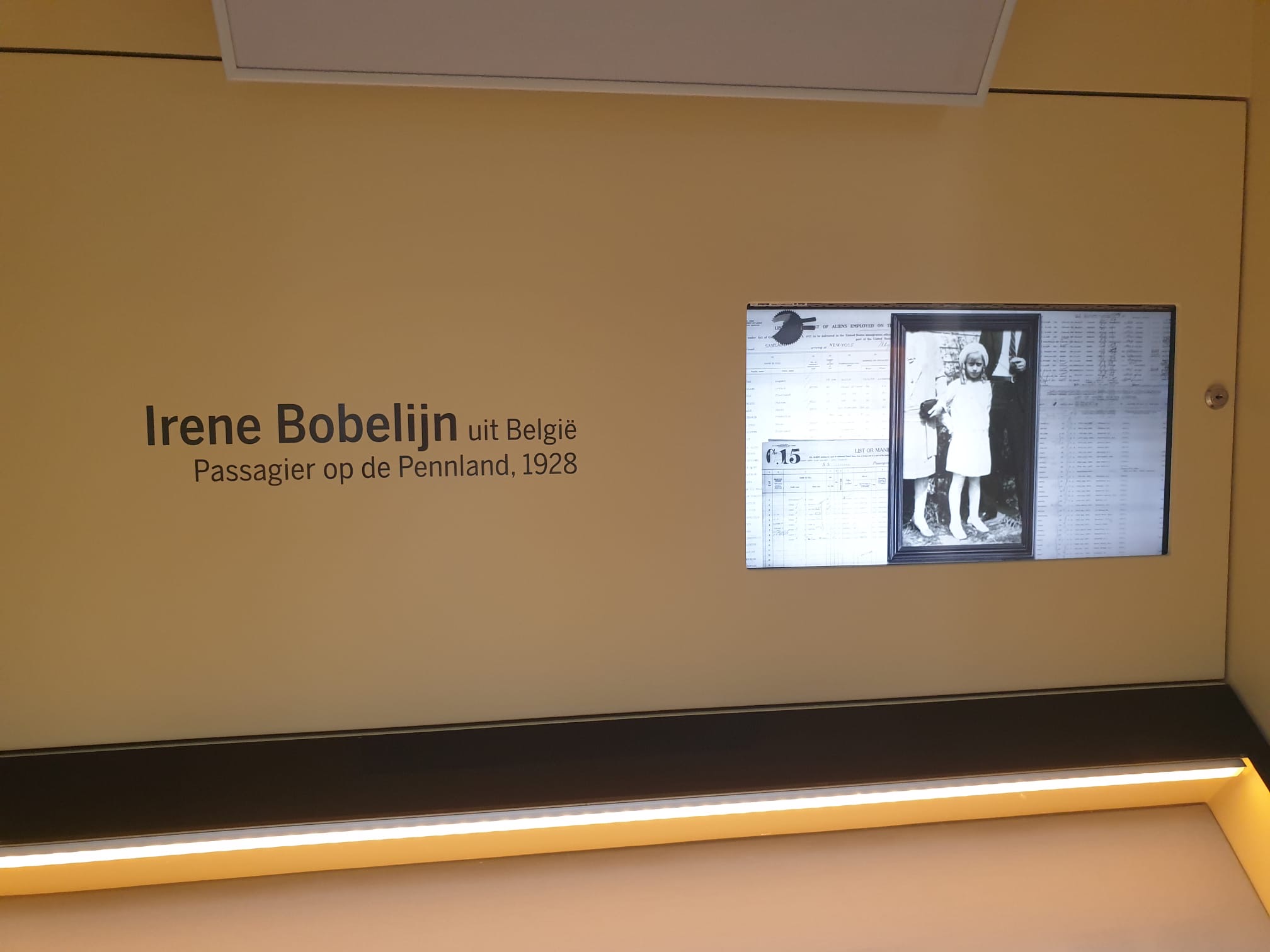

Imagine having to make such a decision: Your husband, whom you haven’t seen for years, is waiting for you on the shore, and you must decide whether to return to Europe with everyone and try again later or send little Irene back alone. An option where the boys joined their father while the mother stayed with Irene was not allowed, as the authorities would not permit unaccompanied minor boys to enter the country. What would you have done?

The mother sent little Irene back to Antwerp alone. A year later, Irene tried again, but she was rejected and had to return once more. She lived another four years with a foster family, and it wasn’t until her third attempt that she was finally allowed to enter the USA. A true nightmare for any child and family. Stories like this likely still happen every day in various forms, though they are often unimaginable to us. Perhaps, 80 years from now, our descendants will hear about the stories of today.

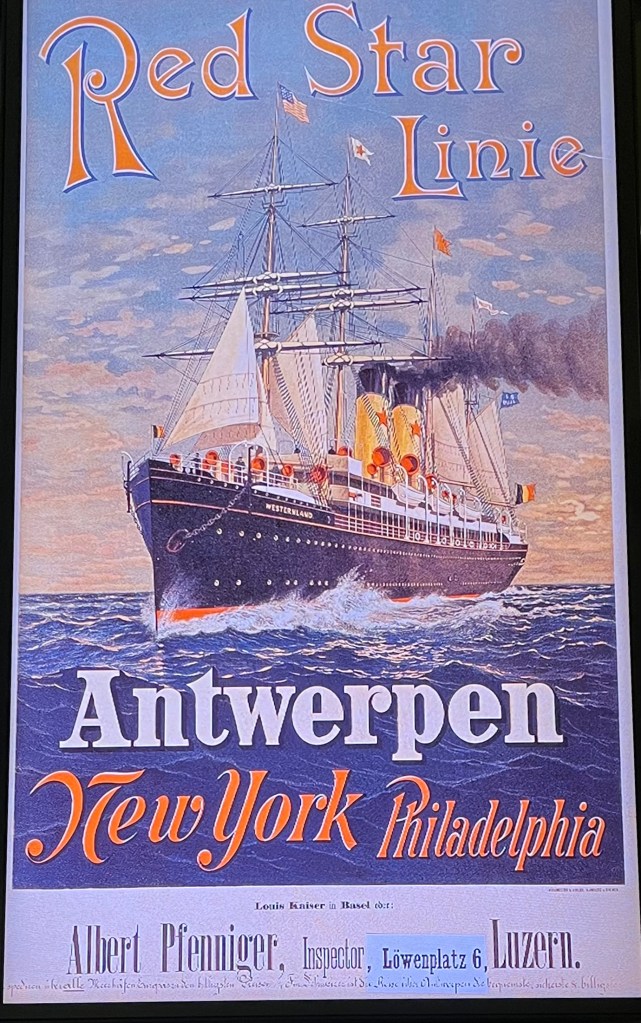
It was also fascinating to learn that the Red Star Line had a European sales network for ticket distribution. In Switzerland, the office was located in Lucerne. If you have ancestors who emigrated to America, you can search for them in digitized archives.
Antwerp was a true discovery for me. It’s a city well worth visiting. For example, the numerous Rubens paintings in the incredibly vast cathedral, the lively old town, the relaxed atmosphere despite the crowds, the fact that in November people still eat, play cards, discuss, and laugh outdoors late into the night, the harbor, the museums, the impressive train station hall, the countless fascinating buildings in the city, as well as the many restaurants and museums. If you have a few days, Antwerp is highly recommended—even in the fog.

Anja


My friend Anja is originally from Russia, but she has been living in Switzerland for what feels like forever. She has adapted well to Swiss culture and built a successful career. Anja is incredibly helpful, funny, and has a big heart. Spending time with her is always a joy. However, in certain areas, she’s quite particular, and even after all these years in Switzerland, things like punctuality haven’t left much of an impression on her. I’m used to her being late. Not always, but almost always. That’s why I only meet her in places where I don’t mind waiting. The best option is when she comes over to my place. Then I couldn’t care less if she shows up at 7 or half past 8.

We had made plans again recently, and based on my past experiences, I suggested she come to my place for dinner. So, we agreed. I told her 6 o’clock on purpose, knowing that she wouldn’t show up before 8 anyway. I didn’t stress about having dinner ready at a specific time either. By 8 o’clock, I had pretty much eaten alone. Calling Anja doesn’t help anyway, because she never picks up her phone. In the past, I used to worry when she was late and tried to find out what was going on. But I stopped doing that a long time ago, as I know it doesn’t help. She’ll eventually show up, smiling as if nothing’s wrong.

That evening, however, Anja didn’t come at all. Since I had a few things to finish, I dedicated the rest of my evening to work.

The next day, Jacob was visiting me when, at 7 p.m., the doorbell rang. There was Anja, greeting me as exuberantly as ever.
“Anja,” I asked, surprised, “didn’t we agree to meet yesterday?”
Completely calm, Anja replied, “My dear, I couldn’t make it earlier,” kissed me on the cheek, and started taking off her shoes.

We ended up having a great evening with lively conversations, though the food was a bit scarce for three. But that’s just typical Anja.

Lisa and Isa


Little Anna had always wanted a pet – it didn’t matter what kind, as long as it was something alive. Since the discussion with her parents about getting a dog or a cat proved difficult, she brought home whatever she could find outside. There were earthworms, tadpoles, snails, cicadas, butterflies, and similar creatures. Anna took care of them and usually set them free after a certain amount of time.

One day, Vivien offered her two mice. Naturally, there was no need to convince Anna – her answer was an immediate “yes!” The real question was how Anna would convince her parents. Unsurprisingly, the discussion that evening was tough. Despite Anna’s tactical skill, her parents didn’t want to hear anything about mice. Anna was quite upset. She refused her favorite food and even turned down the movie they offered to watch together. She withdrew to her room and flipped through her large animal encyclopedia, which she had received from her grandmother for Christmas two years earlier. But the pictures offered her no comfort. Anna had an immense longing for something alive, something she could care for.

Meanwhile, her parents discussed whether it might indeed be possible to give two little mice a home. It could be beneficial for Anna, they thought. Anna’s mother visited her in her room and asked how long these little mice would live. Anna didn’t know, so they began searching for information. They found that mice have a lifespan of about two years. For her mother, this seemed like a manageable risk – she would never have agreed to a turtle.

And so, two little mice – Lisa and Isa – moved in with the Müllers. Together with Anna, her father got a large terrarium second-hand, and Anna set up a cozy and loving home for her two mice. After school, Anna would lock her bedroom door and let the mice roam freely in her room. Her parents would occasionally check to see if everything was okay, but it wasn’t really necessary. Anna took care of Lisa and Isa very responsibly and diligently. Weeks, months, and eventually years passed. By this time, Anna was a teenager, and the two mice had lived with them for nearly four years. The mice’s fur had turned white on the sides, but their advanced age didn’t seem to cause them any problems.

One day, when Anna came home from school, Lisa was no longer moving. She had died. Isa sat closely beside the lifeless Lisa, completely still. Anna didn’t dare move Lisa’s body. She was deeply shaken by the death of the little mouse, but she was even more worried about Isa. Isa, who had never been alone in her life and shared everything with her companion, was now left by herself. Anna didn’t know how to comfort a mouse or how to help her.

Anna sought advice from Vivien, from whom Lisa and Isa had originally come, and who, in Anna’s eyes, was the greatest expert when it came to mice. Vivien was concerned and told Anna that Isa couldn’t be left alone – otherwise, she would die too. So, Anna and Vivien decided that Isa should join Vivien’s mice. But this wasn’t so simple, because even though Isa had originally come from Vivien’s terrarium, the mice living there now didn’t accept Isa right away. Vivien therefore prepared a chamomile bath and bathed all her mice in it. The mice weren’t too thrilled, but none managed to escape Vivien’s grasp. Finally, Anna bathed her Isa in the chamomile bath as well. The entire room smelled of chamomile. With a heavy heart, Anna left Isa with Vivien’s mice, who immediately began sniffing her. The acceptance was there, and so Isa found a new home in the company of other mice.

Vivien explained to Anna that if they hadn’t bathed the mice and Isa had smelled different, the other mice might have bitten her.

And with that, the chapter of having pets came to an end. Lisa was buried in the garden amid tears, the terrarium was sold again – even for the same price as it was bought – and Anna had to explain to her mother that the two-year lifespan applied to wild mice, but under conditions with little stress and plenty of food, their lifespan could double.

Anna learned how important it is to have the same “group smell” in order to be accepted into a community. What applies to mice is no different for humans – it’s just that the solutions that work for mice are hardly practical for people.