
 Romania has a very high fraud in the VAT field and this is why the authorities had put in place a VAT registration process for resident entities, which is far more demanding compared to similar processes in other EU countries. Read More »
Category: Tax Knowledge
India – GST Council rationalises GST rates on a wide ambit of goods and services in different sectors and recommends issuance of clarifications on rates and taxability
 In its 25th meeting held on 18 January 2018, the GST Council has made many recommendations granting relief on the GST rates applicable on goods and services in many sectors. The Council has also recommended issuance of certain clarifications relating to GST rates and taxability of certain goods and services.Read More »
India – Amendment to the Authorised Economic Operator Programme
 In 2016 as a part of the trade facilitation measure, Central Board of Excise and Customs (CBEC) had notified1 a revised Authorised Economic Operator (AEO) programme. The revised programme merged erstwhile Accredited Client programme and AEO programme.Read More »
PwC Global ITX webcast – Update on Indian goods and service tax (GST)
 We are delighted to invite you to the next in the series of PwC’s Indirect Tax global webcasts.
Date: January 30, 2018
Time: 1:00 – 2:00 pm GMT (8 Eastern)
India’s GST went into effect 1 July 2017. So how are businesses managing compliance? Join PwC’s 30 January webcast: http://bit.ly/India-GST
GST antiprofiteering prep: Is your business ready to comply? Join PwC’s webcast on India’s GST, 30 Jan: http://bit.ly/India-GST
On 30 January, join PwC’s webcast on India’s GST: We’ll be talking compliance, competitiveness, & prep for what’s next: http://bit.ly/India-GST
Sweden – Excise duty on air journeys from Sweden as of 1st of April 2018
 As of 1st of April 2018 a new local excise duty is introduced in Sweden on air journeys departing from Swedish airports. Airline companies that fly passengers from Swedish airports will have to report and pay the duty to the Swedish tax authorities based on the amount of passengers and their end destination countries.Read More »
Norway: Foreign suppliers of Electronic Services (B2C) are required to register for VAT through a simplified VAT registration scheme (VOES)
 Norway introduced VAT on supplies from abroad of electronic services to consumers (B2C) as from 1 July 2011. VAT is collected through a simplified registration arrangement, called the VOES-scheme, similar to the MOSS scheme in the EU. Reporting of output VAT is done electronically on a quarterly basis, but VAT recovery is not possible through the scheme. Supplies of electronic services to Norwegian businesses (B2B) is VAT taxable on the purchasers hand via the reverse charge mechanism.Read More »
Norway – Installation lead to VAT registration obligation – current court decision
 We experience that foreign Entrepreneurs believe that VAT in Norway on supplies of goods with installation can be handled by B2B customer on a reverse charge basis, similar to the VAT treatment in most EU countries. Sadly, since Norway is not a member of the EU, the reverse charge mechanism is not applicable, and the supplier will in most cases be obliged to register for VAT in Norway and charge Norwegian VAT to its customer.Read More »
Belarus: Introduction of VAT on digital services from 2018
 As of 1 January 2018 new rules in connection with the VAT on digital services will come into force in Belarus. Under the new rules foreign companies supplying digital services to individuals and individual entrepreneurs will be obliged to register for VAT purposes and and to pay VAT in Belarus. The VAT registration is possible as of 2 January 2018. Read More »
Germany – “Violations against German VAT law are not properly prosecuted” – what does it mean for 2018?
 The German Federal Audit Office (“GFAO”) recently published its “Comments 2017” on the German budget of 2016. The GFAO made one really interesting statement in regards to VAT.
Violations against German VAT law are not properly prosecuted:Read More »
EU – mini one stop shop expanded for distance sales provider
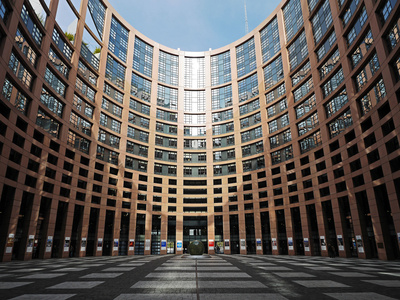 On 5 December 2017, the Council adopted new rules making it easier for online businesses to comply with VAT obligations.
Part of the EU’s ‘digital single market’ strategy, the proposals are aimed at facilitating the collection of VAT when consumers buy goods and services online.Read More »
 Michaela Merz