Warum ich schiessen gelernt habe


Mein Vater ist über 80 Jahre alt, und sein körperlicher Verfall zwingt ihn buchstäblich in die Knie. Doch sein Geist ist wach und sein Erinnerungsvermögen weiterhin legendär. Er ist ein Kämpfer und Tüftler. Trotz seiner körperlichen Einschränkungen pflegt er einen grossen Gemüsegarten, in dem er im Frühling Setzlinge aus Samen zieht. Obwohl er sich weder bücken noch knien kann, hindert ihn das nicht daran, den Garten zu bewirtschaften. Anstatt zu knien, pflegt er ihn liegend. Wo ein Wille ist, da ist auch ein Weg.

Leider ist er auch ein unermüdlicher Sammler – allerdings kein Messie. Alle Dinge, die er aufbewahrt (und es sind viele), sind ordentlich verstaut, und er findet alles in kurzer Zeit. Er erinnert sich oft noch genau, wo und wann er die einzelnen Stücke gekauft oder erhalten hat – selbst, wenn das Jahrzehnte zurückliegt. Er hortet alles, was irgendwann einmal nützlich sein könnte.

Zu seinem Besitz gehören auch zwei Pistolen, für die er eine Waffenlizenz hat. Im Sommer erzählte er mir beim Kaffeetrinken, dass er vor hat, mir die Waffen nach seinem Tod zu vererben – mit dem Wunsch, dass ich sie behalte, quasi als Andenken an ihn. Mein Vater war und ist kein Waffennarr. Ich erinnere mich daran, wie ich als Kind mit ihm geschossen habe. Er war es, der mir das Schiessen mit einem Luftgewehr beibrachte. In der Schule hatte ich nie etwas getroffen, bis er herausfand, dass ich – obwohl Rechtshänderin – mein linkes Auge nicht schliessen kann. Er band mir das linke Auge mit einem Tuch zu, und plötzlich erzielte ich passable Ergebnisse. Das ist jetzt viele Jahre her.

Seit meiner Jugend habe ich nicht mehr geschossen, obwohl sich in unserem Keller eine grosse Waffe befand (wie sie alle wehrpflichtigen Schweizer Männer hatten). Einmal im Jahr musste ich sie für die Kellerreinigung von einer Ecke in die andere verschieben. Als mein Vater den Wunsch äusserte, mir seine zwei alten Pistolen eines hoffentlich fernen Tages zu vererben, begann ich darüber nachzudenken, was das eigentlich bedeutet. Schnell wurde mir klar, dass es sich um ein problematisches Geschenk handelt, da der Besitz solcher Waffen ohne Waffenlizenz nicht erlaubt ist. Ich habe keine Angst vor Waffen, aber ich habe grossen Respekt vor ihnen. Eine Waffenlizenz bedeutet – je nach Land – eine Überprüfung, ob man „fähig“ und „würdig“ ist, eine Waffe zu besitzen. Ich traue mir durchaus zu, eine solche Prüfung zu bestehen. Doch mir wurde ein grosses Bedürfnis, die Pistolen wirklich zu beherrschen und nicht nur pro forma zu besitzen.

Deshalb absolvierte ich am Montag im Schiessstand Bysice meine erste Ausbildungsstunde im Schiessen. Es war kalt und neblig, typisch für Anfang Dezember. Ich hatte jedoch das Glück, eine grossartige Instruktorin namens Monika zu haben: geduldig, motivierend, konsequent und erfahren – Eigenschaften, die eine gute Lehrerin auszeichnen und die sie trotz ihres jungen Alters reichlich besitzt.

Womit beginnt man? Mit Sicherheit, natürlich. Immer wieder, bis die Bewegungen automatisiert sind: Magazin herausnehmen, Lauf kontrollieren, ob leer, Sicherheitsschuss abgeben. Und wieder von vorne. Finger niemals auf den Abzug legen!

Schon nach kurzer Zeit schmerzten meine Finger und Hände vom Üben. Ich lernte, wie man die Schrotflinte hält und anlegt, und wie man die Pistole spannt. Nach vielen Trockenübungen und einer ordentlichen Portion Theorie kamen dann die ersten Schüsse. Man erschrickt dabei unweigerlich, und trotz Gehörschutz ist der Knall beeindruckend laut. Immer wieder werden die Sicherheitsregeln wiederholt und betont – bei jeder Bewegung, bei jeder Aktion. Danach geht es an die Feinheiten des Zielens, die viel Übung erfordern.

Ich weiss nun, worauf ich achten muss und wie ich zielen sollte. Aber schiessen kann ich noch nicht wirklich – ich weiss nur ungefähr, wie es geht. Dank meines Vaters habe ich dennoch etwas Neues gelernt. Falls ihr eine unglaublich geduldige Lehrmeisterin sucht, kann ich Monika auf ihrem Schiessstand in Bysice (https://www.strelnicebysice.cz/) nur empfehlen. Jetzt brauche ich die ersten 500 Schüsse, um das Erschrecken bei der Schussabgabe loszuwerden. Danach sehen wir weiter.

Why I Learned to Shoot


My father is over 80 years old, and his physical decline literally forces him to his knees. However, his mind remains sharp, and his memory is still legendary. He’s a fighter and a tinkerer. Despite his physical limitations, he maintains a large vegetable garden, where he grows seedlings from seeds in the spring. Although he can neither bend down nor kneel, this doesn’t stop him from working in the garden. Instead of kneeling, he tends to it lying down. Where there’s a will, there’s a way.

Unfortunately, he’s also an avid collector—though not a hoarder. Everything he keeps (and it’s a lot) is neatly organized, and he can find anything within a short time. He often recalls exactly where and when he bought or received each item, even if it was decades ago. He hoards anything that might one day prove useful.

Among his possessions are two pistols, for which he holds a firearm license. Over coffee this summer, he told me that he plans to bequeath the weapons to me after his death, with the wish that I keep them as a sort of memento. My father has never been a gun enthusiast. I remember shooting with him as a child. He was the one who taught me to shoot with an air rifle. I had never hit a target at school, until he figured out that, although I’m right-handed, I can’t close my left eye. He tied a cloth over my left eye, and suddenly, I was able to achieve decent results. That was many years ago.

Since my youth, I haven’t fired a gun. Yet there was a large rifle in our basement (like all Swiss men of military age had), which I moved from one corner to another once a year during the annual basement cleaning. When my father expressed his wish to pass his two old pistols on to me one day—hopefully far in the future—I started to think about what that would actually mean. I quickly realized that it would be a problematic gift because owning such firearms without a license isn’t legal. I’m not afraid of guns, but I have great respect for them. A firearms license involves—depending on the country—a review to determine if one is “capable” or “worthy” of owning a gun. I’m confident I could pass such a test. However, I also felt a strong need to truly master the pistols, not just own them as a formality.

That’s why, on Monday, I took my first shooting lesson at the Bysice shooting range. It was cold and foggy, typical for early December. I was fortunate to have a great instructor named Monika. Patient, motivating, consistent, and experienced—qualities every teacher should have, and she has plenty of them despite her young age.

Where do you start? With safety, of course. Over and over again, until the movements become second nature: remove the magazine, check the barrel for emptiness, perform a dry fire. And start over again. Never place your finger on the trigger!

Before long, my fingers and hands ached from practicing how to hold and aim the shotgun, how to rack the pistol. After many dry runs and a solid dose of theory, I finally fired my first shots. It’s startling at first, and even with hearing protection, the noise is deafening. The safety rules were repeated and emphasized again and again—at every movement, at every action. Then came the finer points of aiming, which require a great deal of practice.

I now know what to watch out for and how to aim. But I can’t really shoot yet—I only have a rough idea of how it works. Thanks to my father, I’ve started learning something new again. If you’re looking for an incredibly patient instructor, I can highly recommend Monika at her shooting range in Bysice (https://www.strelnicebysice.cz/). Now, I need the first 500 shots to get over the initial shock of firing. After that, we’ll see where things go.

EU – why production strategy has to be economically justified


The European Court of Justice (ECJ) concluded that Harley-Davidson’s relocation of production from the US to Thailand was primarily intended to circumvent EU trade measures, thus considering the processing in Thailand as ‘non-economic’ under article 33 of the Delegated Act to the UCC, and upheld the European Commission’s decision to invalidate the Binding Origin Information (BOI) decisions granted by Belgian Customs.

In June 2018, the Trump Administration imposed additional import tariffs of 25% on steel and 10% on aluminum. In a countermeasure, the EU introduced additional duties on motorcycles of US origin. In response, Harley-Davidson filed a Form 8-K with the SEC, announcing the relocation of production for motorcycles destined for the EU from the US to Thailand. This move aimed to grant the motorcycles Thai origin, exempting them from the EU’s additional duties. This initial strategy was confirmed by Belgian customs authorities in a binding origin information (BOI).

However, the European Commission stepped in and ordered the revocation of the BOIs, arguing that the relocation did not justify Thai origin status under Article 33 of the Delegated Act of the Union Customs Code (DA UCC). This provision holds that any processing in another territory is not economically justified if it’s primarily to avoid additional import duties. Consequently, Harley-Davidson’s motorcycles remained subject to the EU’s additional duties.

Harley-Davidson challenged this decision at the General Court and later at the Court of Justice. Both courts dismissed the claim, upholding the European Commission’s stance that the relocation was intended to circumvent the additional tariffs.

This case is highly relevant considering the current trade landscape, where countries are increasingly implementing protective measures like additional import duties. This scenario is particularly pertinent when evaluating the relocation of production activities, as seen in disputes over electrical vehicles from China and potential additional duties following the US elections.

Companies naturally seek to mitigate these substantial duties, but the recent ruling underscores the need for careful consideration and thorough analysis of all relevant legislation before making decisions. Relocation should be driven by genuine economic reasons beyond avoiding trade measures, necessitating transparency and robust documentation to justify the economic viability of such strategies.

This case highlights that regulatory bodies will scrutinize relocations coinciding with the imposition of trade measures closely. Production strategy has to be economically justified and well-documented.

Erbverzicht und Ergänzungsleistungen


Vadim und Nathalies Ehe war nach 20 Jahren zu Ende. Der ältere Sohn war 19 Jahre alt, der jüngere fast 17. Vadim zog aus dem gemeinsamen Haus aus und lebte bald darauf mit seiner neuen Freundin zusammen. Die Scheidung nahm ihren Lauf. Vadim und Nathalie einigten sich problemlos und fair auf die Vermögensteilung, wodurch sie sich teure Anwaltskosten sparten. Was bei der Vermögensteilung reibungslos funktionierte, misslang jedoch bei der Regelung rund um ihre Kinder.

Nathalie bestand darauf, dass die Söhne weiterhin den bisherigen Grundsätzen und Pflichten folgten, während Vadim ihnen fast alles erlaubte. Dies führte zu einer schwierigen Situation, in der die Kommunikation zwischen den Eltern vollständig abbrach – ein Umstand, den die Jungs zu ihrem Vorteil nutzten.

Relativ schnell fand Vadim wieder eine feste Partnerin, mit der er zusammenziehen wollte. Da Vadim keine Mietwohnung wollte, entschied er, mit seiner Freundin eine gemeinsame Immobilie zu kaufen. Da seine Partnerin ebenfalls Kinder aus einer früheren Beziehung hatte, war es Vadim ein Anliegen, sich gegenseitig abzusichern. Eine Hochzeit kam für ihn jedoch nicht infrage. In diesem Zusammenhang entstand die Idee, alle Kinder zu fragen, ob sie auf ihr Erbe verzichten könnten. So wollte er gewährleisten, dass er und seine Partnerin auch ohne Ehevertrag abgesichert wären.

Das einzige Problem war, dass der jüngere Sohn noch nicht volljährig war. Vadim musste warten, bis er 18 Jahre alt wurde. Vadim befürchtete, dass Nathalie, sobald sie von seinen Plänen erfahren würde, ihre Söhne davon abhalten könnte. Um dies zu verhindern, bemühte er sich, der grosszügigste Vater zu sein, den die beiden je hatten, und bat die Jungs, der Mutter nichts zu erzählen. Die Strategie ging auf. Fünf Tage nach dem 18. Geburtstag des jüngeren Sohnes unterzeichneten alle Kinder beim Notariat den Erbverzicht. Danach wurde ein grosses Fest gefeiert, und die Söhne dachten nicht weiter darüber nach. Ihr Alltag änderte sich zunächst nicht.

Mit der Zeit kühlte sich jedoch die Beziehung zwischen Vadim und seinen Söhnen merklich ab. Im Verlauf ihrer weiteren Ausbildung wurde den Jungs klar, dass sie die Konsequenzen ihres Handelns damals nicht vollständig verstanden hatten. Jahre später erzählten sie schliesslich ihrer Mutter davon. Nathalie war entsetzt.

Es ging dabei nicht nur um Vadims Vermögen und die Immobilie, sondern auch um das Vermögen der Ex-Schwiegereltern, das später vererbt werden könnte – ein Punkt, der bei der Unterzeichnung des Erbverzichts nicht zur Sprache kam.

Ein weiteres Problem: Ein Erbverzicht kann später auch Auswirkungen auf die Berechnung von Ergänzungsleistungen haben. Ein Vermögensverzicht unterliegt keiner Verjährung; stattdessen wird der Betrag lediglich jährlich um 10.000 CHF reduziert. Dieser Umstand sollte bei der Nachlassplanung sorgfältig berücksichtigt werden. Dass der Notar dies damals gegenüber den jungen Erwachsenen nicht erwähnte, ist kaum nachvollziehbar.

Gemäss Art. 11 Abs. 1 lit. g des EL-Gesetzes werden bei der Berechnung der Ergänzungsleistungen auch Einkünfte und Vermögenswerte angerechnet, auf die verzichtet wurde. Dies dient dazu, Missbrauch zu verhindern. Anspruchsberechtigte sollen nicht zulasten der Versicherung auf Einkommen verzichten und ihr Vermögen verschenken können. Ein Vermögensverzicht muss im Anmeldeformular deklariert werden, wobei die Angaben mit den Steuererklärungen der vergangenen Jahre abgeglichen werden.

Mit 18 Jahren und einem jährlichen Abzug von 10.000 CHF könnte dieser Vermögensverzicht im Alter irrelevant sein – jedoch nur, wenn keine frühere Situation eintritt, die zur Beantragung von Ergänzungsleistungen zwingt.

Inheritance Renunciation and Supplementary Benefits


Vadim and Nathalie’s marriage ended after 20 years. Their older son was 19, and the younger almost 17. Vadim moved out of the family home and soon began living with his new girlfriend. The divorce proceeded smoothly. Vadim and Nathalie agreed amicably and fairly on the division of assets, avoiding costly legal fees. However, what worked seamlessly for their finances did not extend to their children.

Nathalie insisted that the boys continue adhering to the household rules and responsibilities as before, while Vadim allowed them almost complete freedom. This created a difficult situation where communication between the parents ceased entirely – a situation the boys exploited to their advantage.

Vadim soon found a new partner and planned to move in with her. Not wanting to live in a rental property, he decided they would buy a home together. Since his partner also had children from a previous relationship, Vadim wanted to ensure mutual financial security. Marriage was not an option he considered, leading to the idea of asking all his children to renounce their inheritance. This would allow him and his girlfriend to safeguard each other’s interests without the need for a wedding.

The only issue was that the younger son was not yet of legal age. Vadim had to wait until his 18th birthday. Fearing that Nathalie might find out about his plan and dissuade the boys, Vadim became an exceptionally generous father and asked them not to inform their mother. His strategy worked. Five days after the younger son turned 18, all the children signed the inheritance renunciation at the notary’s office. A large celebration followed, and the boys quickly forgot about the matter, as their daily lives remained unchanged.

Over time, however, the relationship between Vadim and his sons grew noticeably strained. During their further education, the boys realized they had not fully understood the implications of their actions at the time. Years later, they finally told their mother, who was appalled.

It wasn’t just about Vadim’s wealth and the apartment but also about the potential inheritance from their paternal grandparents – something that hadn’t been discussed when the waiver was signed.

Furthermore, renouncing an inheritance can impact future eligibility for supplementary benefits. Wealth renunciation does not expire but is instead reduced by 10,000 CHF annually. This detail should be carefully considered during estate planning. The fact that the notary did not mention this to the young adults at the time is puzzling.

According to Article 11, Paragraph 1(g) of the Swiss Supplementary Benefits Act (ELG), income and assets that have been waived are factored into the calculation of supplementary benefits. This rule is in place to prevent abuse; claimants should not give away assets or forgo income at the expense of social insurance. Any renunciation must be declared on the application form and cross-checked with previous tax records.

At 18, the annual reduction of 10,000 CHF may render the renunciation irrelevant by the time one reaches old age – unless an earlier need for supplementary benefits arises.

Germany – e-invoicing – final decree published


The Growth Opportunities Act of 27 March 2024 introduced a binding standard for electronic invoices (known as the E-Rechnung, or e-invoice) from 2025, which applies to all supplies of goods and services performed between taxable persons (B2B) established in Germany. Staggered transition periods will apply for issuing e-invoices, but accepting such invoices in the prescribed format will be mandatory from 1 January 2025. Now the Federal Ministry of Finance (Bundesfinanzministerium, or BMF) has published a final decree on this matter.

Issuing invoices

The decree explains that although the law requiring taxable persons established in Germany to issue e-invoices (including credit notes) will go into effect on 1 January 2025, the government has granted comprehensive transitional provisions. In practice, the obligation to issue e-invoices has generally been postponed to 1 January 2027. Small and medium-sized businesses whose total annual turnover does not exceed €800,000 have been granted a further postponement, to 1 January 2028. Electronic invoices submitted via Electronic Data Interchange (EDI) that are not in line with the e-invoice format may also continue to be used until 31 December 2027.

Being established in Germany is the deciding factor as to whether e-invoicing is mandatory, regardless of whether VAT is actually shown on the invoice. For instance, e-invoicing would be required for an intra-Community supply of goods carried out by a German taxable person to a foreign fixed establishment of another taxable person established in Germany. The decree explicitly confirms that, in this respect, holding a taxable lease of a property in Germany will also give rise to the assumption that the taxable person doing so is deemed to be established in Germany.

Some exceptions will apply to this obligation. For example, e-invoicing is not required if goods or services are supplied by or to a foreign taxable person not established in Germany, or to a private individual. Similarly, e-invoicing is also not required for simplified low-value invoices, for travel tickets which qualify as invoices, or in cases where no invoice is required at all – e.g. for out-of-scope transactions and for VAT-exempt supplies where no right to deduction applies. In all these cases, existing invoice formats may continue to be used – i.e. paper invoices, or, if the recipient gives consent, electronic invoices that do not comply with the e-invoice standard (e.g. PDF, email). Even where no obligation to issue e-invoices is in place, an e-invoice may be issued if the recipient gives their express or implied consent.

The decree states that no exception currently applies to taxable persons subject to the small business scheme, and that they would also be obliged to issue e-invoices after the expiry of the transition periods. It should, however, be noted that the current draft of the Annual Tax Act 2024 (which has not yet been adopted) provides for an exception for simplified small business invoices, which are to be introduced as part of an extensive recast of the small business scheme. In cases where e-invoicing would theoretically only be mandatory for part of the invoice – for example, an invoice issued for multiple supplies but where e-invoicing is only required for some of them – the entire invoice must be issued as an e-invoice. Similarly, supplies which are partly for taxable purposes and partly for out-of-business purposes must be e-invoiced in full.

Input e-invoices

The exemptions granted for the transition period only apply to issuing e-invoices: taxable persons established in Germany will still be required to accept e-invoices from other taxable persons established in Germany from 1 January 2025, regardless of whether input VAT is deductible. Providing an email address will be deemed a sufficient means of accepting e-invoices, though other electronic means of transmission may also be agreed. If a recipient refuses to accept an e-invoice, or is unable to accept an e-invoice for technical reasons, the invoice issuer will be considered to have complied with their VAT obligations if they have issued an e-invoice and demonstrably attempted to submit it.

Permissible formats

E-invoices must be issued in a standardised, machine-readable format that complies with European standard EN 16931, and must be transmitted and received electronically. The parties must be able to ensure the authenticity of the invoice’s origin, the integrity of its content and its legibility. Although e-invoices are only required to be machine-readable, a supplementary human-readable document may also be submitted. However, the decree also states that any discrepancies in the human-readable document may give rise to a VAT liability under Article 203 of the Main VAT Directive due to VAT being incorrectly shown on the invoice.

The BMF allows the XRechnung standard for e-invoices in Germany. The ZUGFeRD format, version 2.0.1 or later, will also be permitted (with the exception of the MINIMUM and BASIC-WL profiles) – this is a hybrid format that contains both a human-readable and a machine-readable part, with the latter being relevant for VAT purposes. Permissible formats are not restricted to those from Germany, and other formats that meet the requirements may be used: the decree gives the French Factur-X standard and Peppol-BIS billing as examples, but – in contrast to a draft of the decree published back in June 2024 – does not explicitly mention the Italian FatturaPA standard.

In terms of the requirements from an accounting standpoint, the structured part of the e-invoice must contain all of the mandatory VAT information required for a proper invoice. However, additional information may be included in an attachment to the e-invoice (e.g. a breakdown of timesheets in a PDF file) or, it would seem, in an extension. Additional exceptions have been granted for written agreements that constitute invoices. A link, however, does not meet the requirements of an e-invoice; the BMF apparently does not consider any linked documents to be part of the invoice.

If the parties to the invoice agree to do so, other formats may also be used if they can be correctly and completely extracted to a format which complies with, or is interoperable with, the EN 16931 series of standards. In this context, “interoperable” means that the necessary information from a VAT standpoint can be obtained from the invoice in its original format and processed without any information being lost. Established electronic invoice formats (the decree mentions electronic data interchange protocols such as EDIFACT) may therefore remain in use even beyond the deadline of 31 December 2027, provided that the e-invoice formatting requirements are met.

Input VAT deduction and correcting invoices

Once the transition periods have expired, only an e-invoice will be sufficient to obtain an input VAT deduction in cases where e-invoicing is mandatory. An input VAT deduction will not become completely impossible if invoices of other formats are submitted instead, but will be conditional on the tax authorities (which will be applying a strict standard) having all the information they need to check the material requirements for input VAT deduction. However, an invoice that has not been issued in the prescribed format (e.g. a paper invoice instead of an e-invoice) may also be corrected by an e-invoice that makes clear and specific reference to the original invoice, and thus shows that it is a correction. Such a correction will be retroactively effective to the date of issue of the first invoice, subject to the usual conditions.

For other corrections, the corrected e-invoice must be submitted in the form prescribed for e-invoices. Sending the missing or corrected information in another format is not sufficient. Corrections of this nature will also be retroactively effective, subject to the usual conditions.

Miscellaneous

There are special provisions for invoices on continuous supplies, for written agreements that constitute invoices, and to final invoices preceded by instalment invoices. Other provisions concern the retention of e-invoices and invoicing to entities under public law. Regarding the latter, it should be noted that e-invoicing for supplies to these entities has already been mandatory for several years, which the decree mentions only in passing.

The decree also makes clear that the new e-invoicing rules will be transitional in nature. When the planned EU-wide reporting system is introduced, other channels for transmitting invoices, in the shape of e-invoicing platforms, are expected to be prescribed – alongside the fact that e-invoicing will then no longer be restricted to companies established in Germany.

Source

BMF decree dated 15 October 2024 (in German language only)

https://www.bundesfinanzministerium.de/Content/DE/Downloads/BMF_Schreiben/Steuerarten/Umsatzsteuer/2024-10-15-einfuehrung-e-rechnung.html
OECD : Importance of VAT


Last week released report by the OECD provides interesting sources of information on the significance of ITX and contains very useful facts/statistics. The report tells a great story and strongly supports the relevance of ITX.

Link: https://www.oecd.org/en/publications/consumption-tax-trends-2024_dcd4dd36-en.html


“At 9.9% of GDP, revenue from consumption taxes in OECD countries remained stable in 2022 compared to 2020 (9.9%) and 2021 (10.0%). The overall share of consumption taxes in total tax revenues has fallen slightly to 29.6% in 2022, compared to 30% in 2021 and 30.1% in 2020. This decline is mainly attributable to the decreasing revenue importance of taxes on specific goods and services (mainly tobacco, alcoholic beverages and fuel, as well as certain environment-related taxes) as a percentage of total tax revenues in OECD countries on average. Value-added taxes (VAT) generated 20.8% of total revenue in OECD countries on average in 2022. VAT continues to be the largest category of consumption taxes, generating almost four times as much tax revenue as excise duties that form the bulk of taxes on specific goods and services, accounting for 5.6% of total tax revenue in 2022 on average.

Main consumption tax trends in OECD countries

Copy link to Main consumption tax trends in OECD countries

  • Consumption tax-to-GDP ratios declined in 12 out of the 38 OECD countries between 2020 and 2022, increased in 22 countries while 4 countries saw no change. Consumption taxes produce more than 40% of total taxes in 5 OECD countries (Chile, Colombia, Hungary, Latvia, and Türkiye). They account for less than 20% of total taxes in 3 OECD countries (Japan, Switzerland, and the United States).
  • VAT revenues have slightly increased in OECD countries between 2020 and 2022 on average, at 7% as a share of GDP in 2022, up from 6.9% in 2021 and 6.7% in 2020. VAT accounts for more than one-fifth of total tax revenues (20.8%) on average, representing 20% or more of total taxes in 21 of the 37 OECD countries that operate a VAT. Seven countries saw a decline in VAT revenue as a share of GDP between 2020 and 2022, while 28 reported an increase and 2 saw no change. Decreases of 0.5 percentage points (p.p.) or more were recorded in Denmark (-0.6 p.p.), Norway (–2.5 p.p.) and Poland (-0.7 p.p.). The largest increases were seen in Germany (+1.0 p.p.), Greece (+1.2 p.p.), Chile (+1.4 p.p.), Italy and Latvia (+1.1 p.p.).
  • Revenues from taxes on specific goods and services, primarily excises, have further declined both as a percentage of GDP (to 2.8% in 2022; a decline of 0.3 percentage points compared to 2020) and as a percentage of total tax revenue (to 8.2% in 2022; down 1.1 p.p. since 2020).
  • Standard VAT rates across OECD countries slightly increased in 2024 at 19.3% on average, up from 19.1% in 2023 and 19.2% in 2022. Three OECD countries increased their standard VAT rates: Türkiye (from 18% to 20% in 2023), Estonia (from 20% to 22% in 2024), and Switzerland (from 7.7% to 8.1% in 2024). Temporary standard VAT rate reductions introduced by Germany and Ireland in 2020 in the context of the COVID‑19 pandemic, and by Luxembourg in 2023 to counter the effects of inflation, were removed.
  • All OECD countries that operate a VAT, except Chile, apply reduced VAT rates to various goods and services to pursue specific policy objectives, most often the promotion of equity (on food, health and hygiene products) and culture (on books, magazines and shows).
  • All OECD countries with a VAT have introduced rules that reflect the recommended OECD VAT standards on online sales of services and digital products from non-resident e-commerce vendors and marketplaces. Twenty-seven OECD countries (Australia, New Zealand, Norway, Switzerland, and the United Kingdom and the 22 countries that are Member States of the European Union) have expanded these e-commerce VAT regimes to include imports of low-value goods.
  • Digitalisation, and the resulting increased availability of data provide tax authorities with opportunities for greater access to VAT‑relevant information. Over the last decade, most OECD countries have implemented electronic transactional information reporting obligations. These requirements are heterogeneous across OECD countries, differing on aspects such as scope, data collected or frequency of reporting (systematic or on request). Seventeen out of the 35 countries requiring electronic transactional reporting require the systematic transmission of such information to the tax authorities and 11 of these countries require transmission in (near) real time. While the progressive digitalisation of invoices continues, and electronic invoicing is now permitted in all OECD countries, it is only mandatory (with a varying scope) in 29 of these countries.
  • Excise duties are used by OECD countries not only to raise revenue but also to influence customer behaviour where consumption is considered harmful to health or to the environment. All OECD countries apply excise duties to alcoholic beverages and tobacco products, but tax rates and structures vary widely. Aviation fuels are often exempt from taxes, particularly when used for commercial international flights.
  • Car taxation is increasingly aimed at influencing customer behaviour towards the use of low polluting vehicles. In 2024, almost all OECD countries consider environmental or fuel efficiency in determining the level of taxation for the purchase or use of vehicles, and 22 of these countries apply tax rebates or exemptions for electric or hybrid vehicles. In 2024, eight OECD countries provide a direct subsidy on the purchase of these vehicles. On the other hand, two countries have rescinded subsidies since 2022.”

Die Geschichte von Irene Bobelijn – Ein Wochenende in Antwerpen


Vor einigen Jahren hatte ich das Vergnügen, das Einwanderungsmuseum in New York zu besuchen. Es war eine faszinierende und zugleich gespenstische Erfahrung. Stellt euch vor, ihr versucht, dem Hunger und der Armut zu entfliehen und wandert aus Europa in die USA aus. Nach Wochen auf einem Schiff über unruhige See erreicht ihr New York. Die Behörden führen verschiedene Tests durch und teilen euch dann mit, dass ein Mitglied eurer Familie nicht ins Land gelassen wird und nach Europa zurückkehren muss. Was würdet ihr tun? Geht ihr alle wieder zurück? Schickt ihr die Person allein zurück, oder teilt ihr euch auf? Diese Fragen habe ich mir damals gestellt, und noch heute erinnere ich mich an das Unwohlsein, das ich in dieser Ausstellung in New York empfand, als ich versuchte, mich in diese Situation zu versetzen.

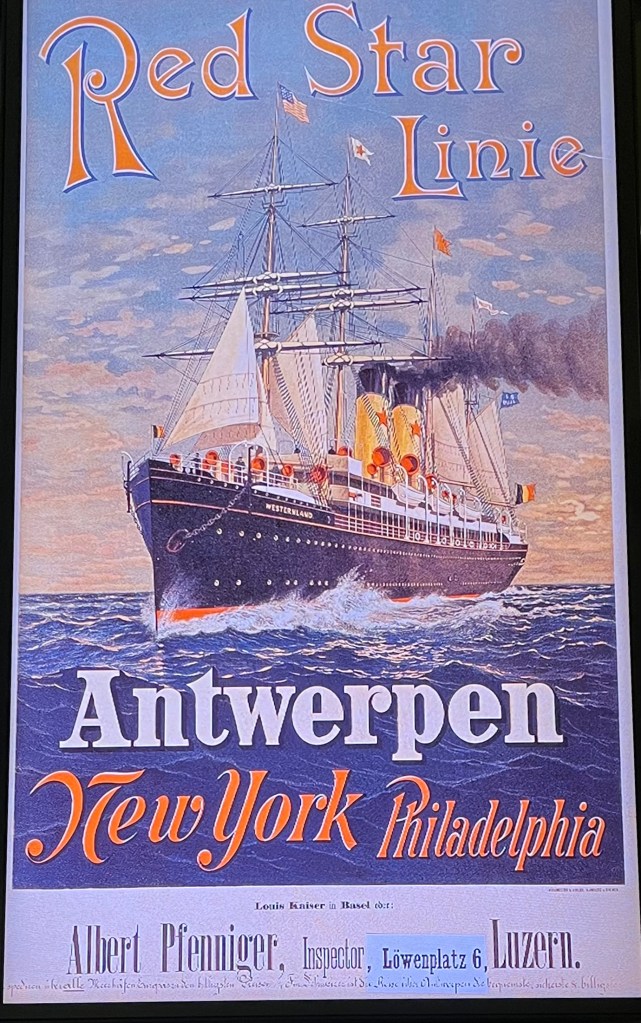
Nun bin ich für ein Wochenende in Antwerpen und besuche das Red Star Line Museum. Dieses Museum beschreibt den Ausgangspunkt der Auswanderungsreise von Europa nach Amerika. Aus Antwerpen sind unzählige Europäer nach Amerika aufgebrochen, getrieben von denselben Gründen wie heute: fehlende wirtschaftliche Perspektiven, Armut und Verfolgung. Das Museum im Hafen ist definitiv einen Besuch wert, und hier habe ich eine der atemberaubendsten Geschichten von unserer Museumsführerin gehört.

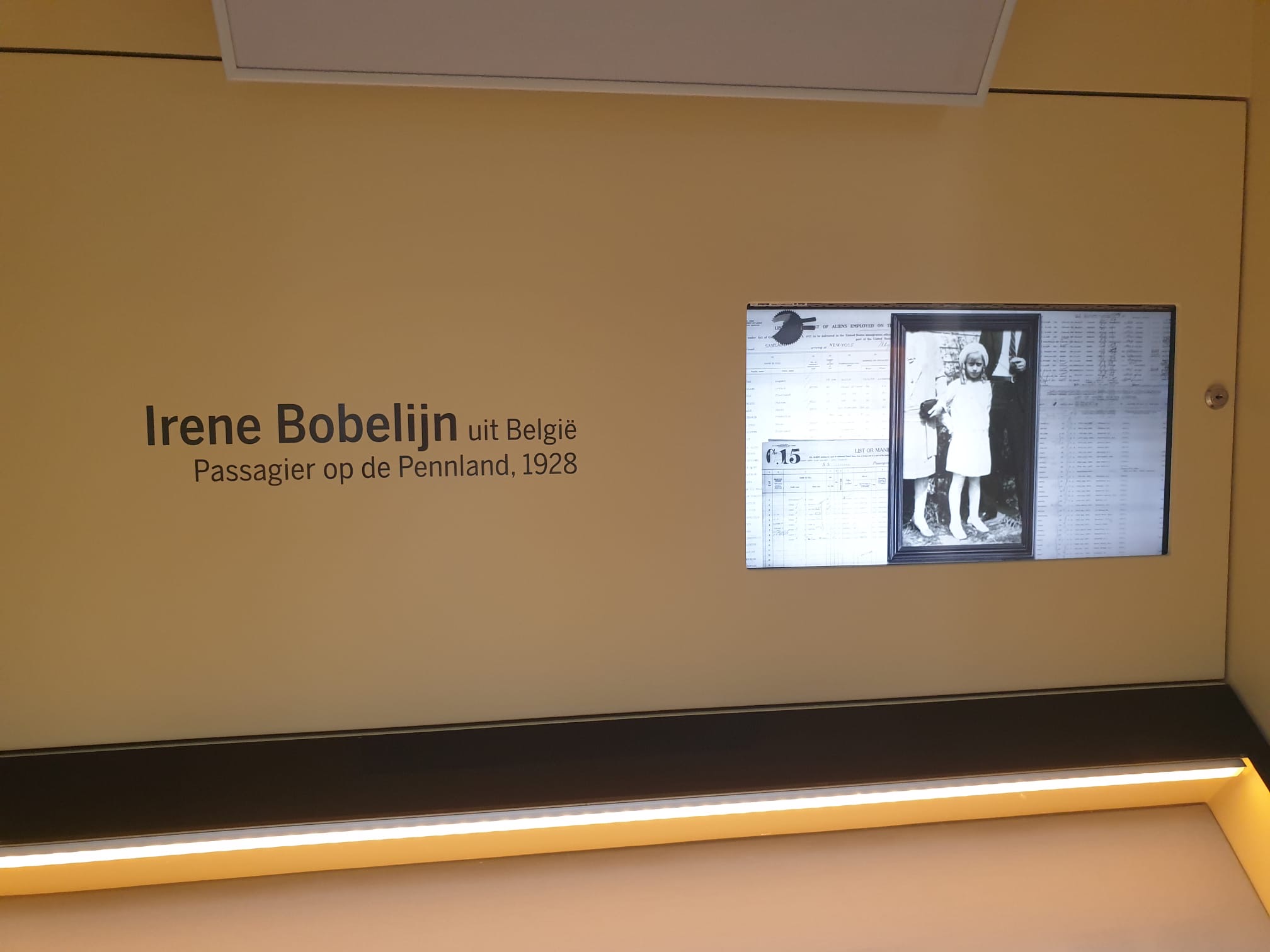
Die Geschichte handelt von der Familie Bobelijn. Der Vater wanderte zuerst in die USA aus, während die Mutter mit drei Jungs und der kleinen Irene in Europa zurückblieb. Nachdem sich der Vater in den USA etabliert hatte, holte er seine Familie nach. Die Mutter und vier Kinder bestiegen ein Schiff der Red Star Line Richtung USA. Die Überfahrt in der dritten Klasse war alles andere als eine Ferienreise: beengte Verhältnisse, keine Privatsphäre, eintöniges Essen und vielleicht auch noch Seekrankheit obendrauf. Bei der Ankunft in New York wurde bei der achtjährigen Irene eine ansteckende Augenkrankheit diagnostiziert. Sie durfte nicht in die USA einreisen. Der Rest der Familie hingegen durfte einreisen.

Stellt euch vor, ihr müsstet diese Entscheidung treffen: Am Ufer wartet euer Mann, den ihr seit mehreren Jahren nicht gesehen habt, und ihr müsst entscheiden, ob ihr alle wieder nach Europa zurückkehrt und es später erneut versucht, oder ob ihr die kleine Irene allein zurückschickt. Eine Option, dass die Jungs zum Vater gehen und die Mutter mit Irene zurückkehrt, stand nicht zur Auswahl, da die Behörde minderjährige Jungs nicht allein ins Land ließ. Wie hättet ihr entschieden?

Die Mutter schickte die kleine Irene allein nach Antwerpen zurück. Nach einem Jahr versuchte es Irene erneut, wurde aber wieder abgewiesen und musste zurückreisen. Sie lebte weitere vier Jahre in einer Pflegefamilie, und erst beim dritten Versuch klappte es. Eine wahre Horrorvorstellung für jedes Kind und jede Familie.

Solche Geschichten wiederholen sich wahrscheinlich täglich in abgewandelter Form, und wir können sie uns oft nicht vorstellen. Vielleicht werden unsere Nachfahren in 80 Jahren von den Geschichten von heute erfahren.

Ebenfalls spannend war zu erfahren, dass die Red Star Line eine europäische Vertriebsorganisation für den Billettverkauf hatte. In der Schweiz war das Büro in Luzern. Falls ihr Vorfahren habt, die nach Amerika ausgewandert sind, lässt sich in digitalisierten Archiven nach ihnen suchen.


Antwerpen war für mich eine wahre Entdeckung. Es ist eine Stadt, die eine Reise wert ist. Beispielsweise die vielen Rubens-Bilder in der unglaublich weitläufigen Kathedrale, die lebendige Altstadt, die Gelassenheit trotz der Menschenmassen, die Tatsache, dass im November bis spät in der Nacht draußen gegessen, Karten gespielt, diskutiert und gelacht wird, der Hafen, die Museen, die beeindruckende Bahnhofshalle und die unzähligen spannenden Gebäude in der Stadt, die vielen Restaurants und Museen. Falls ihr ein paar Tage Zeit habt, ist Antwerpen auch bei Nebel sehr empfehlenswert.

The Story of Irene Bobelijn – A Weekend in Antwerp


A few years ago, I had the pleasure of visiting the Immigration Museum in New York. It was a fascinating yet eerie experience. Imagine trying to escape hunger and poverty by emigrating from Europe to the United States. After weeks aboard a ship on rough seas, you finally arrive in New York. The authorities conduct various tests and then inform you that one member of your family cannot enter the country and must return to Europe. What would you do? Would you all go back together? Would you send the person back alone, or would you split up? These were the questions I asked myself back then, and to this day, I still recall the unease I felt in that exhibition in New York as I tried to put myself in that situation.

Now, I’m spending a weekend in Antwerp and visiting the Red Star Line Museum. This museum tells the
story of the starting point for many emigration journeys from Europe to America. Countless Europeans embarked for America from Antwerp, driven by the same reasons people migrate today: lack of economic opportunities, poverty, and persecution. The museum, located in the port area, is definitely worth a visit, and it was here that I heard one of the most breathtaking stories from our tour guide.

The story is about the Bobelijn family. The father emigrated to the USA first, while the mother stayed in Europe with three boys and little Irene. After the father had settled in the USA, he sent for his family. The mother and her four children boarded a Red Star Line ship bound for the USA. The journey in third class was far from a vacation: cramped conditions, no privacy, monotonous food, and perhaps even seasickness. Upon arriving in New York, eight-year-old Irene was diagnosed with a contagious eye disease. She was not allowed to enter the USA, while the rest of the family was granted entry.


Imagine having to make such a decision: Your husband, whom you haven’t seen for years, is waiting for you on the shore, and you must decide whether to return to Europe with everyone and try again later or send little Irene back alone. An option where the boys joined their father while the mother stayed with Irene was not allowed, as the authorities would not permit unaccompanied minor boys to enter the country. What would you have done?

The mother sent little Irene back to Antwerp alone. A year later, Irene tried again, but she was rejected and had to return once more. She lived another four years with a foster family, and it wasn’t until her third attempt that she was finally allowed to enter the USA. A true nightmare for any child and family. Stories like this likely still happen every day in various forms, though they are often unimaginable to us. Perhaps, 80 years from now, our descendants will hear about the stories of today.

It was also fascinating to learn that the Red Star Line had a European sales network for ticket distribution. In Switzerland, the office was located in Lucerne. If you have ancestors who emigrated to America, you can search for them in digitized archives.

Antwerp was a true discovery for me. It’s a city well worth visiting. For example, the numerous Rubens paintings in the incredibly vast cathedral, the lively old town, the relaxed atmosphere despite the crowds, the fact that in November people still eat, play cards, discuss, and laugh outdoors late into the night, the harbor, the museums, the impressive train station hall, the countless fascinating buildings in the city, as well as the many restaurants and museums. If you have a few days, Antwerp is highly recommended—even in the fog.

EU – Implementation of EUDR postponed


EU Parliament decided to delay EUDR implementation for 12 months, i.e. until 30 December 2025. The 24 months delay was rejected.

The Parliament also adopted other amendments proposed by the political groups, including the creation of a new category of countries posing “no risk” on deforestation in addition to the existing three categories of “low”, “standard” and “high” risk.

Please find here the info: https://www.europarl.europa.eu/news/en/press-room/20241111IPR25340/eu-deforestation-law-parliament-wants-to-give-companies-one-more-year-to-comply